
To donate to a radio station wisely, give through the station’s own official page to an organisation you have checked, pick an amount and frequency that fit your budget, use a payment method you trust, and read the recurring-gift terms before you confirm. It takes about ten minutes and no special knowledge.
That matters because local, community and student stations usually rely on listener donations for most of their income, and a well-timed gift pays for the local reporting, music and studio time you already use. Get it wrong, though, and you can end up with a surprise monthly charge, a receipt you cannot use, or money handed to an impersonator.
Below is the process I would follow, whether the station is a nonprofit member station in the United States, a registered charity in the UK, or a volunteer-run community outlet.
Table of Contents
What You Need Before You Donate
Four things, and you probably already have all of them.
The station’s official donation page. Type the station’s web address yourself rather than following a link in a text, email or social post. The page should name the station or its parent organisation clearly, not just say donate now.
A way to check its status. In the US, look for a 501(c)(3) designation and an EIN on the station’s own site, then search that name in the IRS tax-exempt organisation lookup. In the UK, a registered charity has a charity number you can check against the Charity Commission register. Many small community stations are not charities at all, and that is fine — it only means there is no tax claim.
A payment method you trust. A card, a bank transfer or direct debit, or a digital payment platform. Whichever you pick, make sure you are comfortable with the fees and the refund terms.
Somewhere to record the gift. A note in your accounts app, a folder for receipts, or a line in a spreadsheet. Donors regularly lose track of what they gave and to whom, then find out at filing time.
Step-by-Step: How to Donate to a Radio Station Wisely
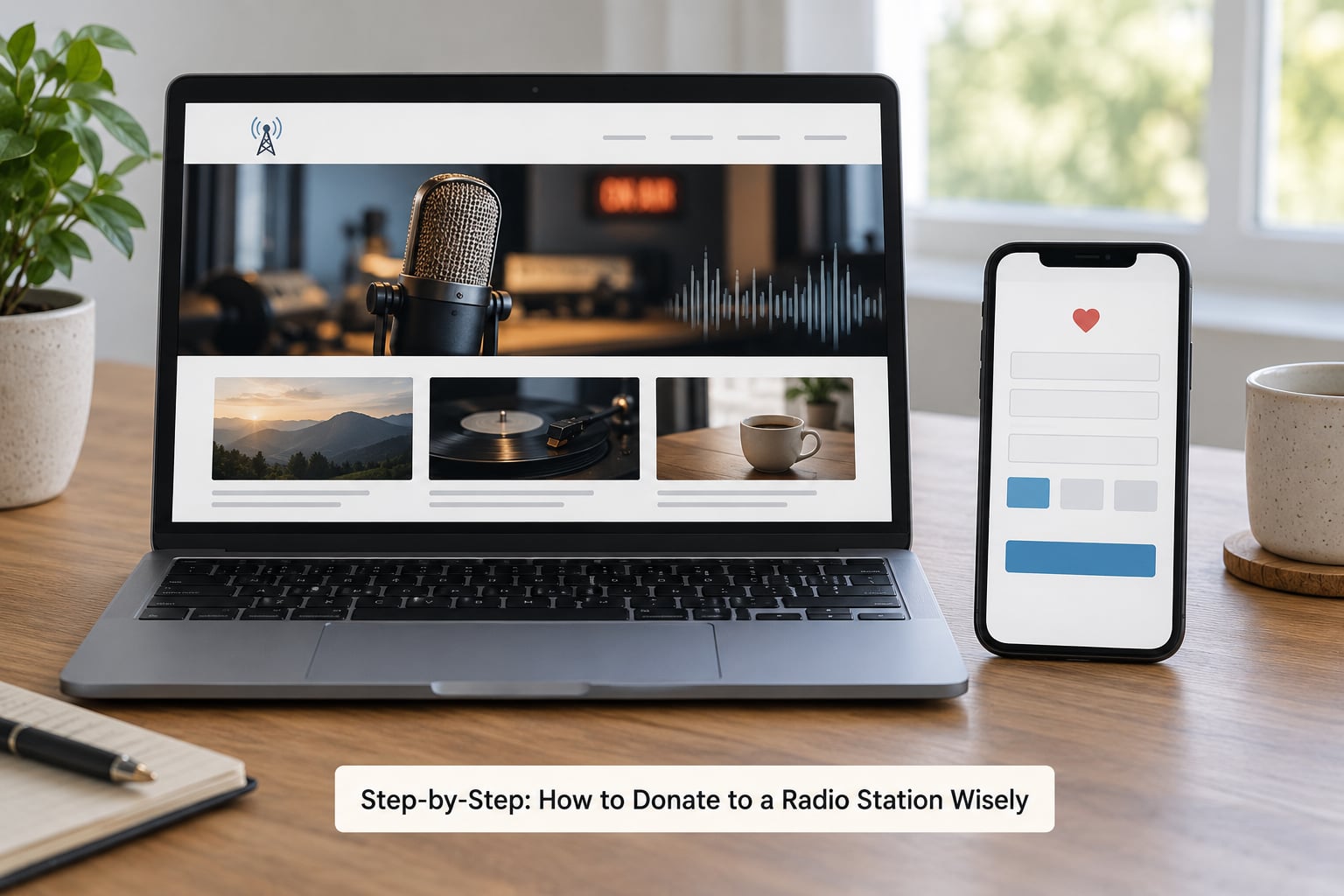
1. Confirm that the station is legitimate
Go straight to the station’s verified website or its official social profiles. Never start from an unsolicited message, no matter how urgent it sounds. A text claiming your payment failed, or an email saying your account will close tonight, is the most common opening move in fake donation appeals.
On the station’s own pages, look for a real postal address, a named membership or development contact, and a phone number someone answers. If the site only offers a form and no way to reach a human, that is a signal.
2. Check how donations support the station
Non-commercial stations normally put money into programming and production salaries, local news reporting, transmitter licences and electricity, streaming and bandwidth fees, and fundraising costs. Community stations add studio equipment, training and insurance.
You will know the answer quickly if the station publishes an annual report or accounts. Vague lines like supporting great content everywhere, with no named show or project, tell you very little. If the money’s destination is unclear, email the membership office and ask before you pay.
3. Decide how much and how often to give
One-time gifts are simple and easy to budget. Monthly sustaining gifts are what most stations actually plan around, because predictable income lets them book a reporter or commit to a slot. A modest monthly figure over a year usually does more for a station than the same total given once, during a fund drive.
Set your ceiling before you open the form. Pick an amount you would not miss if the station vanished, and write it down somewhere. The trap is a selected monthly amount quietly becoming an open-ended commitment, so read the frequency box carefully at step five.
4. Choose a secure payment method
Card and direct debit give you the strongest control: you can see the charge, dispute it, and cancel a direct debit at your bank without asking the station. Bank transfer or cheque is slower but avoids handing card details to a web form altogether, and many stations still prefer it for larger gifts.
Digital payment platforms are convenient, but fees eat into the gift and the station may not see your details. For anything larger, talk to the station about stock or securities transfer, a donor-advised fund grant, a workplace match, or a gift from a retirement account. Those routes are usually more tax-efficient than a card, and a quick conversation with a financial adviser is sensible before you move money.
5. Review the form before submitting
Check seven things: the organisation name matches the station you researched, the amount is the amount you chose, the frequency says what you meant, your payment details are right, the refund policy is stated, there is a real contact, and any recurring-donation wording is unambiguous.
Tick the box on recurring gifts only if you genuinely want an ongoing charge. Untick email marketing consent unless you want it. If anything on the page looks different from the site you verified, stop and go back.
6. Check that the donation went through
You should get an on-screen confirmation straight away, then an email receipt within a few minutes. If neither appears, do not assume it went through and do not submit the payment again straight away — duplicate charges are common and easier to fix than you would think.
Check your bank or card statement a day or two later. Silence from the station after a confirmed transaction is a reason to contact the membership office directly using the details on their own site.
7. Save the confirmation and tax record
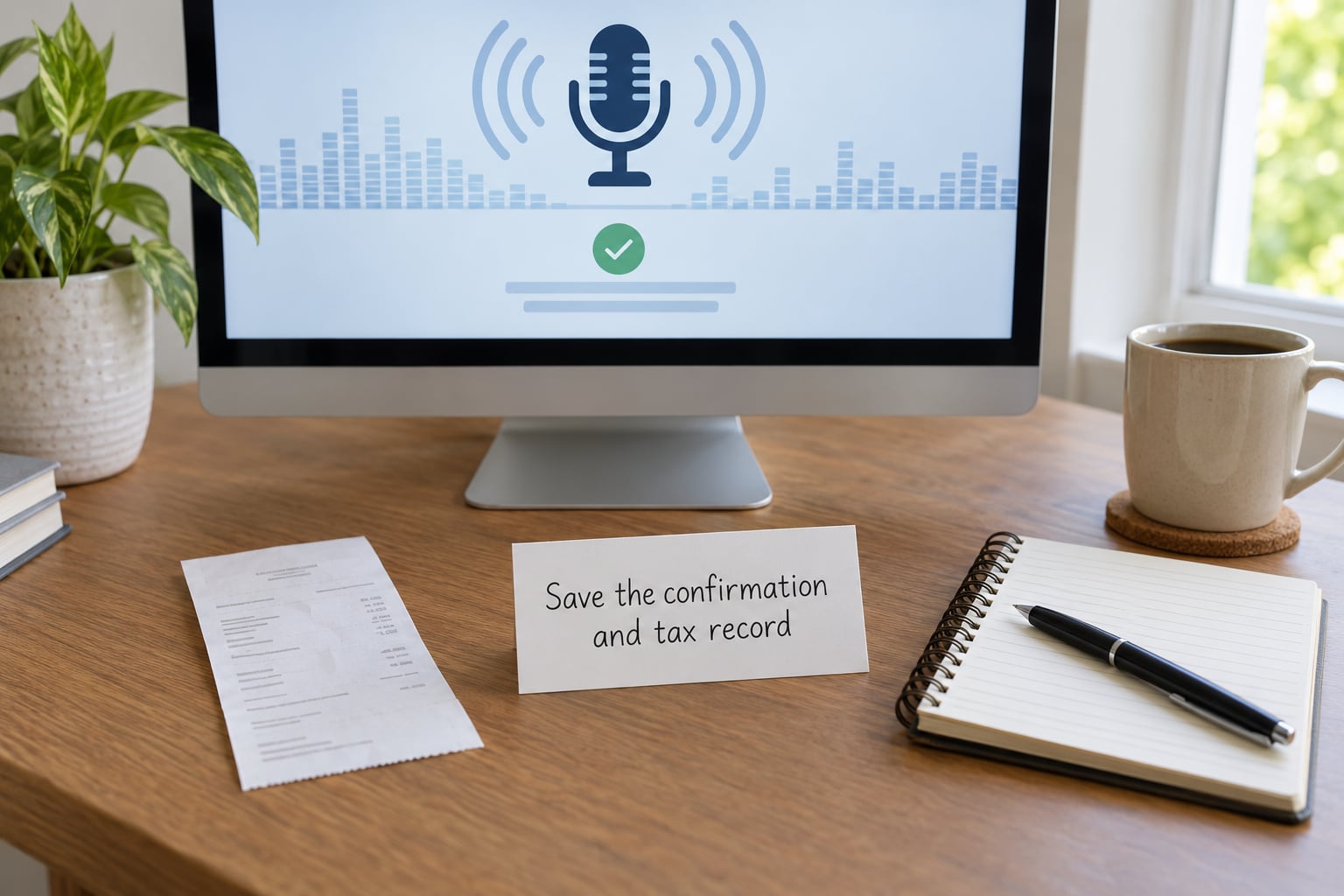
Keep the receipt with the date, the amount, the organisation’s exact legal name, your payment reference and your tax or charity number. A screenshot of the confirmation page is useful, but the emailed receipt is better because it carries the details your tax return needs.
Whether you can claim the gift depends entirely on the station’s status and the rules where you live. A registered charity or 501(c)(3) donor gets a receipt for the claim. In the UK, a Gift Aid declaration can add 25p per pound you give, but you must be eligible and you must have signed one. A commercial station gives you no tax claim at all. Nothing here is personal tax advice, and rules change.
Common Mistakes When Donating to a Radio Station
Donating through an impersonator. A lookalike domain or a cloned logo is enough to fool a hurried reader. Fix: navigate to the site yourself, bookmark it afterwards, and treat any message that arrives first as unverified until you confirm it from a source you found.
Ignoring the recurring box. A pre-ticked monthly option is the single most common complaint from first-time donors. Fix: read the frequency line out loud before you submit, and screenshot the confirmation so you know what you agreed to.
Using an unsecured link. Never enter card details from a page reached through a shortened or forwarded link. Fix: close it, open the station’s site directly, and complete the gift there.
Overlooking fees. Payment platform charges, foreign transaction fees and credit card handling fees all reduce what arrives. Fix: compare the net amount before confirming, and use a fee-free method for anything above a small gift.
Assuming every station is a charity. A great deal of local and community radio is not registered at all. Fix: look for the registration number, and if there is none, give accepting that you cannot claim it back.
Sending details through an unsolicited message. No legitimate station needs your card number over chat or by reply to a random email. Fix: use the form on the official site, and report the message rather than engaging with it.
Forgetting to cancel. A monthly gift set up during a drive can quietly run for years. Fix: keep the confirmation in one folder, and check your statements every few months for a donation you no longer want.
Frequently Asked Questions
Can I donate to any radio station?
Yes, any station that accepts outside money will usually take a gift, but the terms differ. Non-commercial, community and student stations welcome listener donations directly, often with no minimum. Commercial stations generally do not take donations for airtime; you can sponsor a programme or an event instead. Check the station’s own site for the route it supports, and expect no tax benefit unless it is a registered charity or nonprofit.
Are donations to radio stations tax-deductible?
Only when the recipient is a registered charity or nonprofit. US listener-supported stations are typically 501(c)(3) organisations and issue receipts for gifts. UK stations that are registered charities can claim basic rate relief on donations through Gift Aid if you sign a declaration. Commercial stations, and many community stations with no registration, give you nothing to claim. Keep the receipt and check the rules that apply where you live.
Is it safe to donate by credit card to a radio station?
Yes, if you are on the station’s real website and the page uses a secure connection. Card and direct debit also give you the best protection, because a charge you do not recognise can be disputed and a direct debit cancelled through your bank. Never enter card details through a link in an unsolicited text, email or social message. When in doubt, close the message and reach the station’s donation page yourself.
How do I stop a recurring radio station donation?
Use the member portal or account page on the station’s official site, where most stations let you change the amount, switch to one-time, or cancel outright. If there is no self-service option, email or phone the membership office and ask them to stop it, then keep the reply. You can also cancel a direct debit with your bank, which stops future payments but may not release you from an existing agreement with the station.
Why did my radio station donation fail?
The usual causes are an expired or declined card, a bank block on unfamiliar recurring merchants, a failed address check for postal gifts, and a form that timed out before it submitted. Card declines from fraud filters are common the first time you give to a new charity. If the amount was authorised but not taken, it is usually released within a few working days. Contact the station if the money has left your account but no receipt arrives.
Start With the Station’s Official Donation Page
If you do one thing, type the station’s web address into your own browser and give from the donation page you land on there. Everything else on this list is a refinement of that single habit.
Check the organisation name, decide on an amount and whether it repeats, read the recurring-donation wording, and save the confirmation before you close the tab. If a message started this whole process, do not reply to it — open the station’s site yourself.
To donate to a radio station wisely is mostly about restraint: give what you can genuinely afford, to a station you have verified, on a frequency you meant. That is how listener support stays independent of both advertisers and impulse.