Swing and bebop shared the same radio dial and then split it in two. Swing arrives as a big band leaning into a steady swung pulse you can move to, while bebop arrives faster, smaller and far busier, with harmony that keeps turning away from the melody. If you want to know how bebop differs from swing on air, the tells sit in the pulse, the size of the ensemble and how much of the track is tune versus improvisation.
Neither style is harder to hear than the other. They are built for different jobs, and once you know what job each one is doing, a jazz station becomes much easier to read.
Table of Contents
- How Bebop Differs from Swing on Air: At a Glance
- What Is Swing Radio Programming?
- What Is Bebop Radio Programming?
- How Do Rhythm and Tempo Sound Different?
- How Do Harmony and Melody Change the Sound?
- How Do Instruments and Vocals Shape the Broadcast?
- How Bebop Differs from Swing in Energy and Programming
- How to Recognize Each Style While Listening
- Which Should You Choose?
- Frequently Asked Questions
- Start with the Sound You Want to Hear
How Bebop Differs from Swing on Air: At a Glance
The table below is the version to keep beside you while you listen. Every row is something you can hear rather than something you have to study first.
| Criterion | Swing | Bebop |
|---|---|---|
| Era and scene | Late 1930s to mid 1940s, dance halls and big-band radio programmes | Early to mid 1940s, Harlem jam rooms and small club dates |
| Tempo | Medium to fast, with plenty of room to breathe | Fast, and often pushed faster in the choruses |
| Rhythm feel | Swinging eighth notes, buoyant and forward | Closer to straight eighths, clipped accents, heavy syncopation |
| Ensemble size | Big band, roughly sixteen to eighteen players | Small combo, usually five or six players |
| Harmony | Diatonic, familiar changes, the tune stays central | Chromatic, substitute chords, unexpected alterations |
| Role of melody | Lead melody and arranged sections carry the track | Theme is stated, then left behind for improvisation |
| Instrumentation heard on air | Saxophone sections, brass, piano, sometimes a crooner | Frontline horns, piano or electric piano, upright bass, drums |
| Vocals | Relaxed, arranged, often the headline feature | Rare, and usually a brief vocal over dense playing |
| Track length on air | Three to five minutes, tidy for a radio slot | Long, with extended solos and no hard clock |
| Best radio home | General jazz shows, evening variety hours, dance-flavoured streams | Late-night specialist shows, deep cuts on album shows |
What Is Swing Radio Programming?
Swing on air is jazz written to keep time. A big band of sixteen or eighteen players sits behind a melody you could hum after one hearing, and the rhythm section pushes a beat that stays even from the first bar to the last. That evenness is the whole point: the music works as accompaniment as well as music.
You can hear the era in the sound. Count Basie and Glenn Miller-type section writing, Duke Ellington’s longer forms, and relaxed, conversational phrasing from singers crooning over a rhythm section rather than pushing against it. Bands alternate between arranged features, where the horns move as one block, and solo spots where a single player steps forward.
Stations present swing kindly. It slots neatly into a three or four minute radio slot, it needs no explanation, and a presenter can say jazz and mean something a listener already half knows. That accessibility is a large part of why it stayed in rotation long after the big bands themselves had shrunk.
What Is Bebop Radio Programming?
Bebop on air is jazz written to be listened to, not danced to. It grew out of the late-night jam sessions around Minton’s Playhouse in Harlem and the clubs on 52nd Street, and it arrived already fast, already harmonically restless, and already disliked by a good share of the audience.
What reaches a listener is compressed into small groups, usually a frontline of one or two horns with piano, bass and drums behind. The theme is played once, and then the track becomes a series of long improvised statements, each one a different answer to the same chord sequence.
Radio treats bebop more carefully. A specialist show will place a long, dense take in the middle of the night, where the audience is actively listening, and will let it run past four minutes without trimming the solos. A general jazz hour will use bebop as a change of gear, rarely more than one or two tracks in a row.
How Do Rhythm and Tempo Sound Different?
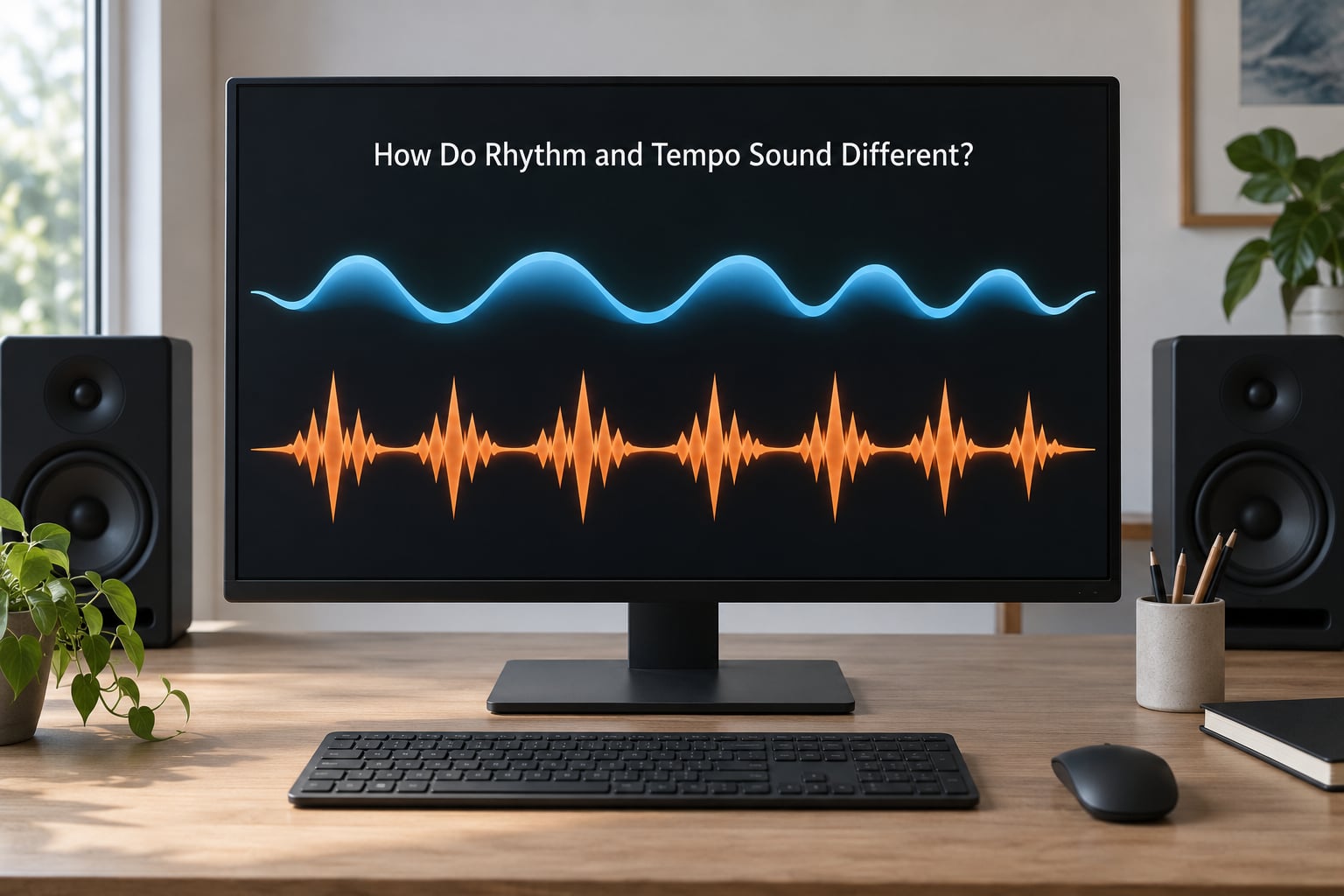
The clearest difference is not speed, it is weight. Swing eighth notes are triplet-based, so a note that should fall between two beats lands late, and the whole line leans forward. Bebop at speed often sits much closer to straight eighths with the drive in the accents, which is why a bebop line can be fast and yet feel less fluid than a swing band at a similar tempo.
The drummer is the reason. A swing band leans on the ride cymbal, a steady ding-ding-ding that defines the beat for dancing. Bebop keeps that timekeeping but adds accents, displaced hits and pressure from the cymbals, so the pulse feels urgent rather than buoyant. The bassist walks, and the piano comping gets sparser, which leaves more room for the soloist.
That shift happens inside jazz itself rather than between two separate genres. At slower tempos the harder, looser swing dominates, and as the tempo climbs the feel straightens out and the eighths shorten. That is a good instinct to keep in your ear: swing is a feel first and a label second.
How Do Harmony and Melody Change the Sound?
Swing harmony stays diatonic. The chords of the tune stay in view, substitutions are gentle, and a listener’s ear is never asked to hold a chord in its head while the melody moves on. That is the musical reason a big band can carry a song so easily.
Bebop harmony goes chromatic. Altered tones, diminished chords and tritone substitutions push the harmony away from the tune’s own chord vocabulary, and the solo line sometimes stops outlining the chord changes altogether. On radio the effect is an odd sense of buoyancy, as though the melody has been lifted off the ground it started from.
Because the tune is often stated only at the top, first-time listeners usually still recognise a bebop head by its angular line even when the pulse feels unfamiliar. That line is the strongest recognition cue, and the chords underneath are what make it possible.
How Do Instruments and Vocals Shape the Broadcast?
Swing foregrounds colour and section. On air you hear a wall of saxophones and brass, balanced piano, a walking bass that supports everybody, and drums playing time rather than conversation. The blend is the feature, and in a car stereo or a small speaker it fills the space in a way few other genres manage.
Bebop foregrounds individuals. One horn leads, the rhythm section answers rather than accompanies, and electric piano colours appear alongside the acoustic sound. Through broadcast compression those sharper transients and louder accents tend to sit forward in the mix, which makes a fast acoustic combo read as intense on a phone speaker in a way that a warm big band does not.
Vocals tell the story of the two eras. Swing had singers built into the arrangements, crooning and relaxed. Bebop treated the voice as optional, and the few vocal tracks on specialist stations exist mainly as contrast against the instrumental density around them.
How Bebop Differs from Swing in Energy and Programming
Pacing separates the two on air more reliably than tempo does. A swing broadcast builds and releases in regular waves, and the listener resets easily between features. A bebop show moves in longer arcs with no clear landing, which is relaxing for a close listener and tiring for someone who arrived mid-track and cannot find the thread.
Presenter language changes too. A swing hour leans on song title, singer and year. A bebop hour leans on player, sideman, studio and label, because those details are the point for the audience listening at one in the morning.
Genre labels on station sites blur the boundary. You will see jazz, swing, classic jazz, jump jazz and jazz revival used loosely, and a revival band playing 1930s charts in a modern rhythm section can sit closer to bebop on an ear test than to the recordings it is reviving. Trust the sound, not the playlist category.
How to Recognize Each Style While Listening
Four tests take about thirty seconds each, and they work on almost anything the station plays.
- Count the pulse. Listen to the ride cymbal or hi-hat for ten seconds. A long, even, bell-like pattern with a floating, laid-back lope points to swing. A busier pattern with sharp off-beat accents points to bebop.
- Try to follow the tune. Ask whether you could sing the main melody after the track ends. On swing, usually yes. On bebop, most listeners cannot, because the melody left early and never came back.
- Estimate the ensemble size. Count distinct instrumental voices you can pick out. More than eight usually means a big band and therefore swing. Five or six means a combo.
- Watch how long the solos run. Short, tidy solos in a fixed order point to arranged swing. One soloist playing for two or three minutes without returning to the theme points to bebop.
How bebop differs from swing in the first thirty seconds
Give the opening thirty seconds of any track. If you can feel the beat from the first bar and the band stays in one groove for a minute, you are hearing swing. If you are aware of something shifting almost every four bars, and the loudest instrument seems to change character without warning, that shift and complexity is what bebop sounds like on air.
Which Should You Choose?
Choose swing when you want company rather than concentration. It works in the background, in a car, at a party, and at a time of day when you do not want to follow anybody’s solo. Classic big-band broadcast hours and any show built around vocal features are the easiest places to start.
Choose bebop when you want to listen closely. It rewards a good pair of headphones, a quiet room and the patience to let a soloist finish a thought. Late-night specialist shows and album-based jazz streams are where it gets the most airtime and the least interruption.
A useful middle route exists between the two: hard bop, which keeps some of swing’s groove and blues feeling while carrying bebop’s harmony, and cool jazz, which sits at a slower, looser, more arranged end. If swing feels too busy and bebop feels too cold, one of those two is usually where you actually want to be.
Frequently Asked Questions
What makes bebop different from swing?
Swing is big-band, dance-oriented jazz built on a steady swung pulse. Bebop is small-combo, fast-tempo jazz built on complex chord changes and continuous improvisation. In practice you hear it as a flowing, familiar melody from a full ensemble versus a stated theme followed by long, harmonically restless improvised solos from about six players.
Why was bebop controversial?
Because it was aimed at musicians rather than audiences. It broke with the big band, dropped most of the vocal material listeners expected, and ran fast, dense solos where a singable tune used to be. Record labels found it hard to sell, and the audience that had grown up dancing to swing often treated it as an unmotivated attack on the music they knew.
Why did swing music decline in popularity?
Big bands were expensive to run and wartime economics broke them, the musicians’ strike of 1945 sent players looking for other work, and the older audience aged out. At the same time bebop and then rock and roll took the energy and the airtime. Labels shifted first to bebop, then to rhythm and blues, and swing survived mainly as a revival.
Was John Coltrane a bebop musician?
He began in bebop, playing in the Charlie Parker quintet in the late 1940s, and kept the vocabulary as he moved on. But he is more often filed as hard bop and then as modal jazz, where the harmonic changes fall away and the improvisation carries everything. Calling him purely a bebop musician misses most of what he did after 1955.
How do you tell bebop and swing apart by ear?
Listen for three things. Swing usually keeps a steady, even, slightly late pulse with a long ride cymbal pattern. Bebop sits closer to straight eighths with sharp accents. And on bebop the tune disappears after the opening statement, so if you can still sing the melody three minutes in, you are almost certainly hearing swing rather than bebop.
Is bebop good background listening on the radio?
It can be, if you treat it as texture rather than as a set of solos to follow. Bebop works well on a long station playlist when you are working or cooking and do not need a song you can hum. If you want to know who is playing what, or follow the harmony, it asks for more attention than swing does.
Start with the Sound You Want to Hear
Play one swing broadcast and one bebop show back to back, and track four things: the pulse, whether the melody survives, how many players you can count, and how long the solos last. That single exercise is worth more than any amount of reading about the history.
Once you know which one you actually want to hear, follow that style rather than drifting between them. Swing wants a steady evening on a well-run jazz channel. Bebop wants headphones, a quiet room, and a specialist show that lets the solos run long. Updated for October 2026, this guide is the map; the listening is the point.