To become a radio DJ you need air time, and air time comes from practice, not from a qualification. The fastest legitimate route is a home online stream you can start this month; community, student and hospital stations take a few months of volunteering; commercial radio takes longer. This guide walks through how to become a radio DJ step by step, from choosing a route to recording your first demo show.
A radio presenter (radio jockey, if you prefer the older term) is the on-air voice of a station or stream. You introduce music, talk between songs, read news, traffic and weather, play adverts, take requests and interview guests, usually in timed shifts from a studio. Club DJ work is a different job entirely, and plenty of people learn that the hard way.
Nobody hires on a CV alone in radio. They hire on how you sound, which sounds unfair until you realise it means you can practise it yourself for free, tonight, in a spare room.
Table of Contents
- What You Need
- Step-by-Step
- 1. Decide Whether You Want an Online, Community, or Commercial DJ Path
- 2. Learn the Format Before You Learn the Gear
- 3. Build and Organize a Broadcast-Safe Music Library
- 4. Set Up and Test Your Studio
- 5. Practice the Skills of Radio DJing
- 6. Record a Three-Minute Demo Show
- 7. Get Feedback and Improve Your First Show
- 8. Find a Place to Broadcast
- 9. Understand Licenses, Rules, and Professional Expectations
- Common Mistakes
- Frequently Asked Questions
- Conclusion
What You Need
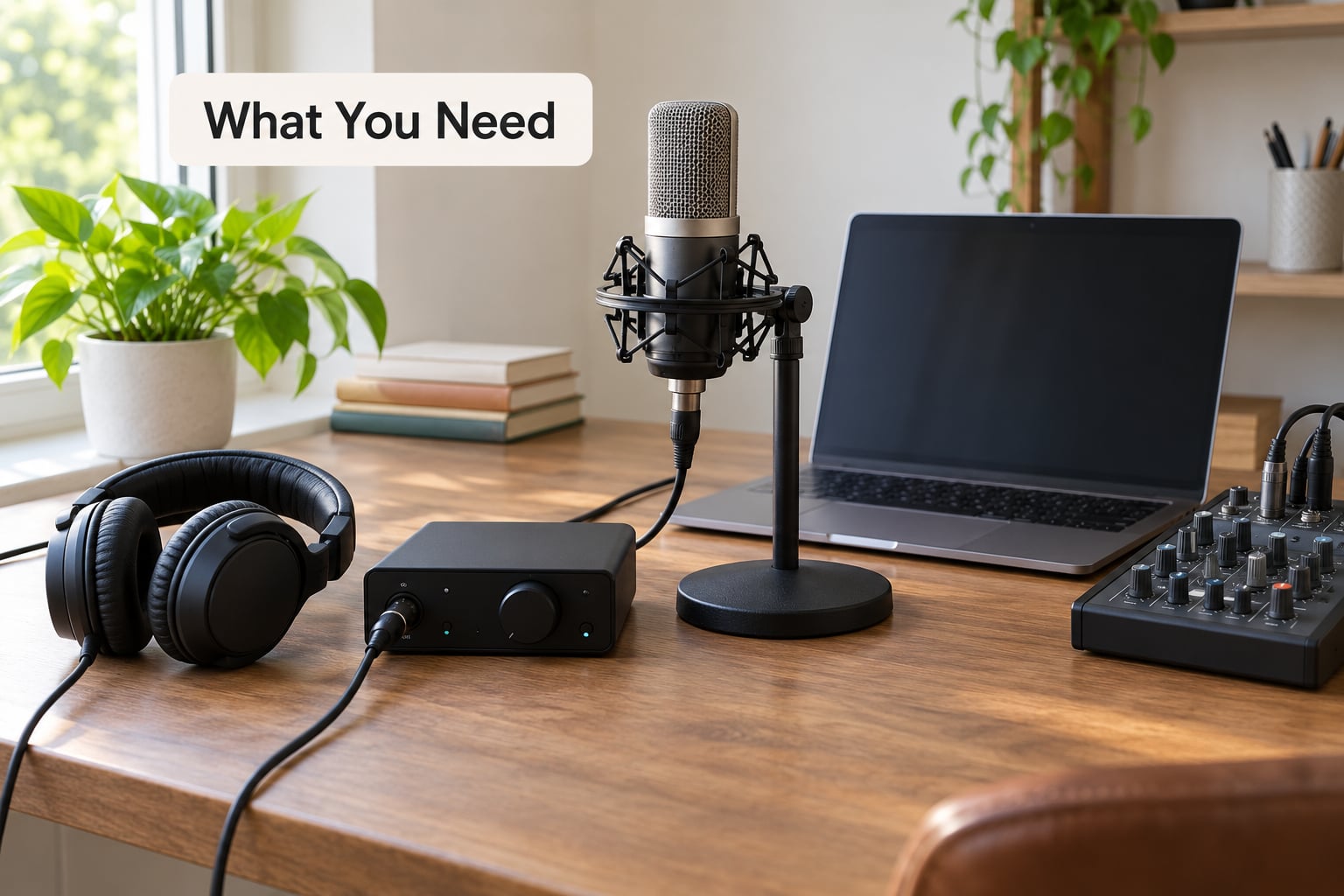
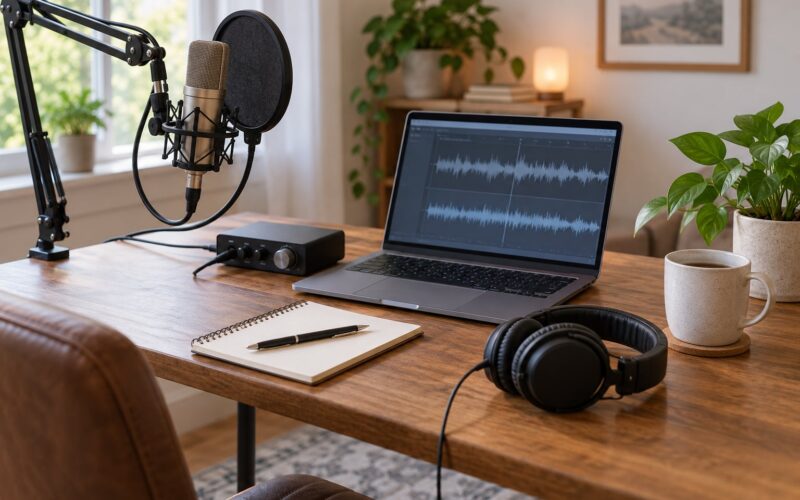
The minimum setup is smaller than the gear photos online suggest. Everything below can be set up in an afternoon, and two of the four items you may already own.
The four things that matter
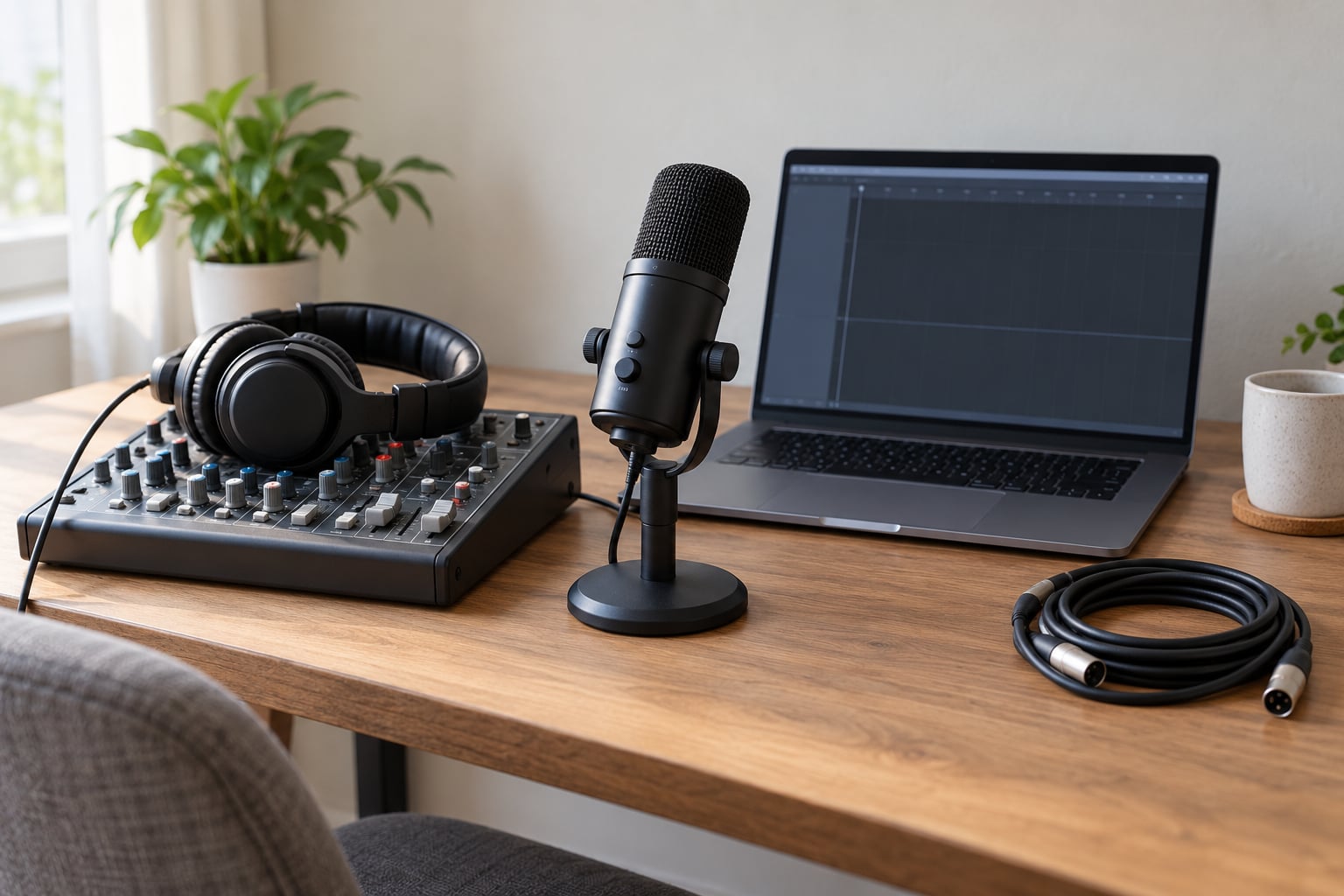
- A computer. A laptop from the last six years is fine. The work is audio editing and automation, not video.
- A microphone. A USB condenser microphone plugs straight into the laptop and needs no extra hardware. It picks up room noise too, so treat the room as part of the kit.
- Closed-back headphones. You need them to hear music clearly and to cue the next track without the speaker blasting into the mic.
- An audio interface, later. Once you outgrow the USB mic, a two-in two-out interface with proper gain control gives you a real console feel and lets you plug in other kit.
A small mixer helps if you want to run two playback sources at once, which you will as soon as you start playing jingles and beds under speech. Most beginners get away with software mixing for their first hundred shows.
Software worth using
Radio automation software is the bit that makes presenting feel professional. It plays tracks, fires jingles and stingers on cue, logs what you played for the music report, and can run unattended while you talk. Look for a program with a proper show scheduler and a cart-wall view, since that is what real studios use.
For editing and recording, any standard digital audio editor works. For streaming, pick one tool that handles live encoding and lets you add a second audio device for your chat or music-bed channel.
A music library you can actually search
Ten hours of well-tagged music beats a thousand tracks you cannot find. Write down artist, title, year, tempo and a note on where each track suits, because you will not remember whether that one came in a minor key.
Where the signal comes from
For online broadcasting you need a dependable internet connection and an encoder that sends audio to your streaming provider. For local FM or transmitter work, that equipment belongs to the station, not to you, which is one of the reasons community radio is such good training.
Step-by-Step
Nine steps, in the order that actually works. Skipping to the end is why most people get stuck.
1. Decide Whether You Want an Online, Community, or Commercial DJ Path
Pick a destination before you buy anything, because the routes reward different things. Here is the honest comparison of entry requirements, time to first broadcast and what you get paid at the start.
- Online station you run yourself. Sign up with a streaming platform, set up an encoder and publish a schedule. Time to air: days. Pay: none until you build an audience.
- Student radio. Join the society or union station and take the production induction. Time to air: a few weeks to a term. Pay: usually unpaid, sometimes a small society honorarium.
- Community radio. Email the station manager, offer to volunteer and sit in on a training session. Time to air: weeks to a few months. Pay: volunteer, occasionally a small stipend or expenses.
- Hospital radio. Apply through the hospital radio charity or its national body. Time to air: a few months. Pay: volunteer, sometimes a small paid role.
- Independent local commercial. Submit an air check when they advertise a presenting vacancy. Time to air: months to over a year. Pay: paid shifts, and rates vary widely by region.
- Commercial network. Agency auditions, a strong demo, and often unpaid internships first. Time to air: one to three years. Pay: paid, but the ladder starts long.
Two honest notes before you commit. First, presenters on volunteer stations often stay volunteers for years without it turning into paid work, and that frustration shows up repeatedly in radio forums and station Facebook groups. Second, some stations run training programmes where you pay them and they never broadcast you, so treat any paid “training” offer with suspicion.
If you want the career ladder rather than the hobby, do both: volunteer at a community station and run your own stream. One gives you a real studio and a real audience, the other gives you air time you control.
2. Learn the Format Before You Learn the Gear
Every station sounds different on purpose, and that difference is called the format. Before you pick a song, decide five things: what the show is called, who it is for, how long it runs, how often it airs, and the balance between music and talking.
That last one matters most. A breakfast show on a local commercial station might be 40 per cent speech, all of it timed to the nearest minute around news and weather. A specialist community show might be 95 per cent music with four minutes of chat an hour. Mixing those two on one stream looks like a mistake even when both are good shows.
Write the format down in one sentence, then build your playlist clock around it. A clock is simply the running order: three tracks, a link, a track, a longer feature, and so on. Presenting to a clock is most of the skill.
3. Build and Organize a Broadcast-Safe Music Library
Choose music you would happily play to a stranger in a car. Then tag it properly, because searching fast is the difference between a smooth link and an awkward gap.
- Strip anything you did not record yourself, or get written permission. Record companies take playback rights seriously.
- Check every track for the clean version versus the radio edit. An unedited version on air is the classic beginner embarrassment.
- Mark intros, outros and any part of the track with explicit content.
- Note the song length in your playlist, since badly trimmed songs reveal an amateur instantly.
- Keep a duplicate copy somewhere separate, because the show needs to survive a failed drive.
Do not broadcast music without checking the rights situation first. There is more on this in step 9.
4. Set Up and Test Your Studio
Set the levels before you worry about anything else, and do it in this order.
- Record 20 seconds of silence in the room with the mic in place. Listen back. If you can hear traffic, fridges or a clock, fix the room before the kit.
- Set your mic gain so normal speech sits comfortably below the point where the meter clips. Speak loudly once to check the headroom.
- Set playback levels so music sits clearly under speech without being pushed so hard that it sounds harsh.
- Put on headphones and walk the microphone away from the grille slightly, then closer. Find the distance that rejects room noise without sounding muffled.
- Play a track, talk over it briefly, then stop talking and let the music come up. That balance test is what a listener hears every fifteen minutes.
- Record a full five minutes, listen on headphones, then listen on a phone speaker and a cheap speaker. Problems show up differently on each.
Add a pop filter if you have no windscreen, and keep the mic on a stand or arm rather than a desk. A mic that moves when you move is the quietest killer of a beginner show.
5. Practice the Skills of Radio DJing
Presenting is a performance skill that nobody can teach you by talking. Break it into parts and practise them separately, out loud, with a recording running.
- Music selection. Play two tracks and explain in fifteen seconds why one follows the other. If you cannot, the link will not land either.
- Spoken links. Aim for one breath per sentence and finish the thought before the track starts.
- Timing. Rehearse a five-minute sequence against a clock until you are not watching it.
- Mic technique. Hold the distance you worked out in step 4 and do not drift while a sentence matters.
- Cueing. Start the next track a few seconds before the link ends, at a sensible volume, so the transition never has a hole in it.
- Audience awareness. Say the hour, name something local, and reference the weather. Radio is a companion medium.
- Recovering from trouble. Practice what you do when a track will not play: keep talking, log it, and move on. Silence plus improvisation beats a long apology.
Record yourself and listen back once a week. Almost everyone cringes the first time. That reaction is normal and it is also the fastest way to improve.
6. Record a Three-Minute Demo Show
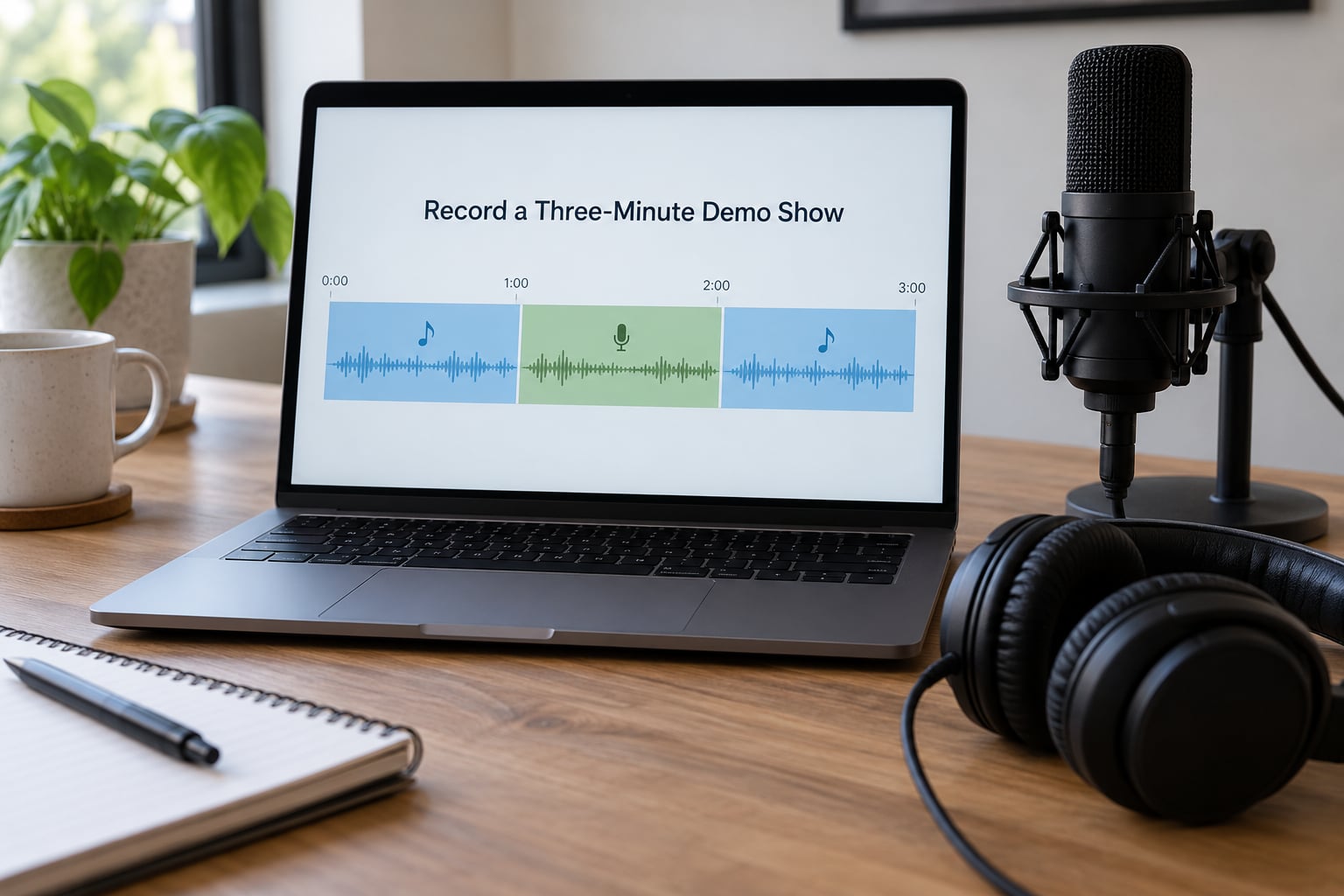
An air check is the sample you send when you apply. Stations usually want three to five minutes of unbroken presenting that shows your format, your voice and your timing, and they want it clean.
Build it like a real show rather than a montage. Start with a hello and a time check, go to music, come back with a link, run one short feature or story, and finish with a sign-off. Do not stack three voices or fade between unrelated sections, and do not use station idents, jingles or sweepers you do not have rights to.
Three rules for the recording itself. No music louder than the speech, because the click or pop in your voice is far more obvious when the level is wrong. No long pauses, because they suggest hesitation when you may simply have been thinking. And no apologising for your voice, because stations have heard every voice there is and are listening to the presenting, not the timbre.
Export at a decent quality, name the file properly with your name and the show title, and write a short cover note saying what the show is and where you heard the station.
7. Get Feedback and Improve Your First Show
Your own ear gets worse at spotting problems after a few hundred shows, so borrow someone else’s. Send the demo to three people: one who knows radio, one who is in your target audience, and one who is neither.
Ask them two questions only. What did you think the show was about? Where did you want to stop listening? Both answers tell you more than a score out of ten would.
Then fix the technical problems first, because nobody can hear your personality through clipping or a humming mic. After that, shorten your links, tighten your intros, and check that every piece of information you say out loud is one a listener could actually use.
Keep a short checklist for each show: levels checked, music rights cleared, running order printed, requests checked, phone charged. Presenters with a checklist are noticeably calmer on air.
8. Find a Place to Broadcast
Once the demo is ready, aim at places that actually let beginners speak.
Community stations run training schemes and welcome volunteers who arrive with a demo and a willingness to sweep the studio. Email the station manager with a paragraph about you, a link to the demo and two dates you could help. Specificity beats enthusiasm in an inbox.
Student radio is the most underrated door in the UK. The equipment is often better than some community stations, the induction is real training, and the atmosphere is forgiving. University and college radio societies also run outside broadcasts, which are excellent practice because they have no safety net.
Hospital radio deserves more attention than it gets. It is a genuine broadcasting operation, run by volunteers, producing shows for patients who cannot reach a normal station. Presenters often move into community or commercial work afterwards.
Independent online stations are the quickest route to a real schedule. Look for stations that publish their presenter list, contact the programme or community manager, and offer a trial show. Judge any station by whether it gives you real shifts, real feedback and a named person to report to.
Commercial stations advertise presenting vacancies and internships rather than taking cold applications. Read the advert carefully, submit exactly what is asked for, and keep the demo within the length they specify. When you get a callback, expect a chatty interview and a second reading from the news, not a technical test.
Podcasts are a parallel route worth running beside the rest. A recorded show needs no licence and no studio, which makes it the easiest audience you can build while you wait for a station slot.
9. Understand Licenses, Rules, and Professional Expectations
Two separate things get confused here: paying music royalties, and having permission to broadcast at all.
Royalties are the record label side. Stations in the UK hold licences through bodies such as PRS for Music and PPL to cover playing recorded music. If you broadcast on your own stream, the royalty position belongs to you to check, and it is not covered by a station’s licence.
Station permission is the regulator side. Transmitting on FM in the UK requires an Ofcom broadcast licence, and local transmitters, pirate FM and rebroadcasting another station’s feed without permission are enforcement matters, not hobby grey areas. Personal streaming to the internet is a different activity from broadcasting, and it is the route most beginners use.
Community stations on FM and DAB operate under an Ofcom licence with conditions on programming, and volunteers work inside those conditions. If you want to broadcast on a frequency, do it through a licensed station.
There are also practical rules to know. Some stations ask volunteers for a basic criminal record check. Listener emails, texts and birthdays are personal data, and using them for anything beyond the show has data protection rules attached. Read any volunteer agreement you sign, and watch for clauses that quietly take your show or your voice for reuse elsewhere.
This is general information rather than legal advice, and rules differ between platforms and countries. If the money or the contract involved is significant, get a professional to read it.
Common Mistakes
These are the errors that show up in almost every first month. Each has a simple fix.
- Speaking too quietly. Presenters aim for the volume needed in the room rather than the level needed on a small speaker. Fix: record and listen on a phone speaker, then talk louder than feels natural.
- Too close to the mic, or no pop filter. Plosives and a thin nasal tone kill the voice. Fix: a hand’s width off the grille, plus a filter.
- Bad timing. Links that run long push the whole show past its break. Fix: rehearse against a clock and write your feature points in seconds, not words.
- Too much talking. Filling every gap turns a music show into a monologue. Fix: plan silence and let a track breathe.
- Inconsistent format. Every show sounds like a different station because nothing is written down. Fix: keep the same running order until it feels automatic.
- Weak music preparation. Untouched files and wrong versions are the most common broadcast fault. Fix: check every track before the show, not during it.
- Broadcasting without permission. Rebroadcasting a feed or transmitting on a frequency you do not have rights to is not a shortcut. Fix: go through a licensed station or stream under your own name.
One more worth adding: chasing a paid job and ignoring the volunteering offer. A volunteer slot with a named trainer teaches more in three months than a paid shift on a station that lets you talk over adverts for four hours.
Frequently Asked Questions
What equipment do I need to become a radio DJ?
A laptop, a USB condenser microphone, closed-back headphones and decent free automation software are enough to record and stream a real show. Add an audio interface with gain control once you want finer level control, and a small mixer only when you need two sources at once. A treated room matters more than expensive kit: soft furnishings, a door that closes and no obvious noise will beat a costly microphone every time.
Do I need a broadcasting licence to DJ online?
Streaming your own show to the internet is not the same as broadcasting on a frequency. You still need to check the music rights position for the tracks you play, because a station licence does not cover your stream. In the UK, transmitting on FM or DAB requires an Ofcom licence, and rebroadcasting another station’s feed without permission is not a grey area. Most beginners stream under their own name and stay inside the rules.
Can I become a radio DJ with no experience?
Yes. Almost every working presenter started by volunteering, and most stations expect it. Record a three to five minute demo, offer to help at a community, student or hospital station, and take whatever slot you are offered at first. The first few shows will be clumsy and that is expected. What matters in an audition is a clear voice, sensible timing and a format you can sustain, not professional polish.
How long does it take to become a good radio DJ?
You can be on air within days with your own stream, and comfortable on a community station in a few months of regular shifts. Commercial radio is a longer road, usually a year or more of auditions and unpaid work. The honest measure is regular practice: presenters who broadcast two or three hours a week improve steadily, while the people who record once a month tend to stall at the same level.
Do I need a good voice for a radio job?
No particular voice is required, and stations hire widely different-sounding presenters for different formats. What cannot be taught quickly is a conversational delivery, clear diction, the ability to sound warm and unhurried, and the habit of sounding like yourself rather than reading a script. If listeners can follow you easily at street volume, your voice already works. Practice fixes the rest.
How do I get a job at a community or online radio station?
Email the station manager or programme lead with a short note about you, a link to a demo and two dates you could volunteer. Show you understand the unglamorous side too: sweeping the studio, logging music, checking requests. Ask whether they run training sessions or induction sessions for new presenters, and offer to start with those. Specific dates and a prepared demo get far more replies than general enthusiasm.
Conclusion
Start small and start today. Write your show format in one sentence, prepare ten tracks and record three minutes of presenting. That is the whole first move, and it costs nothing but an afternoon.
How to become a radio DJ is less about the gear on your desk than the hours you put in on it. Get your first stream running, then volunteer somewhere with a studio so somebody experienced can critique you. 2026 is a perfectly good year to start, and the people who waited for the right equipment mostly never started at all.