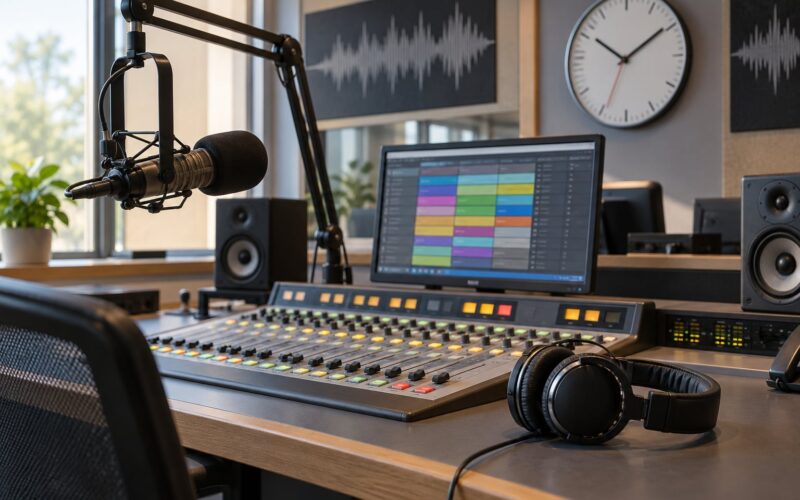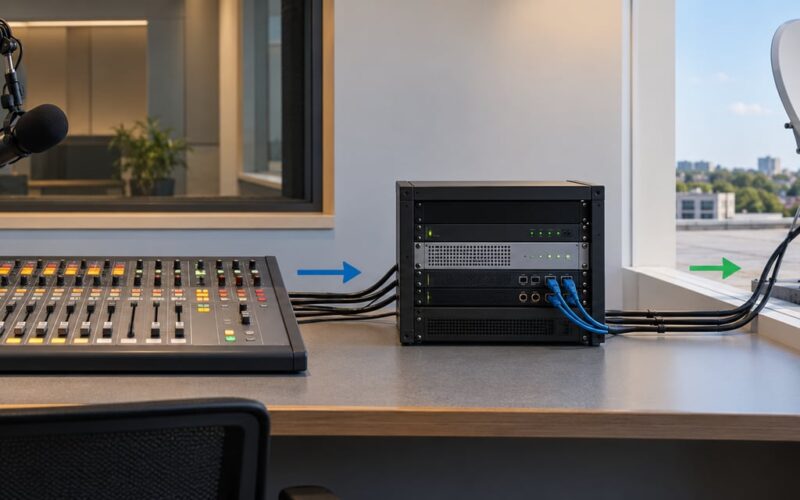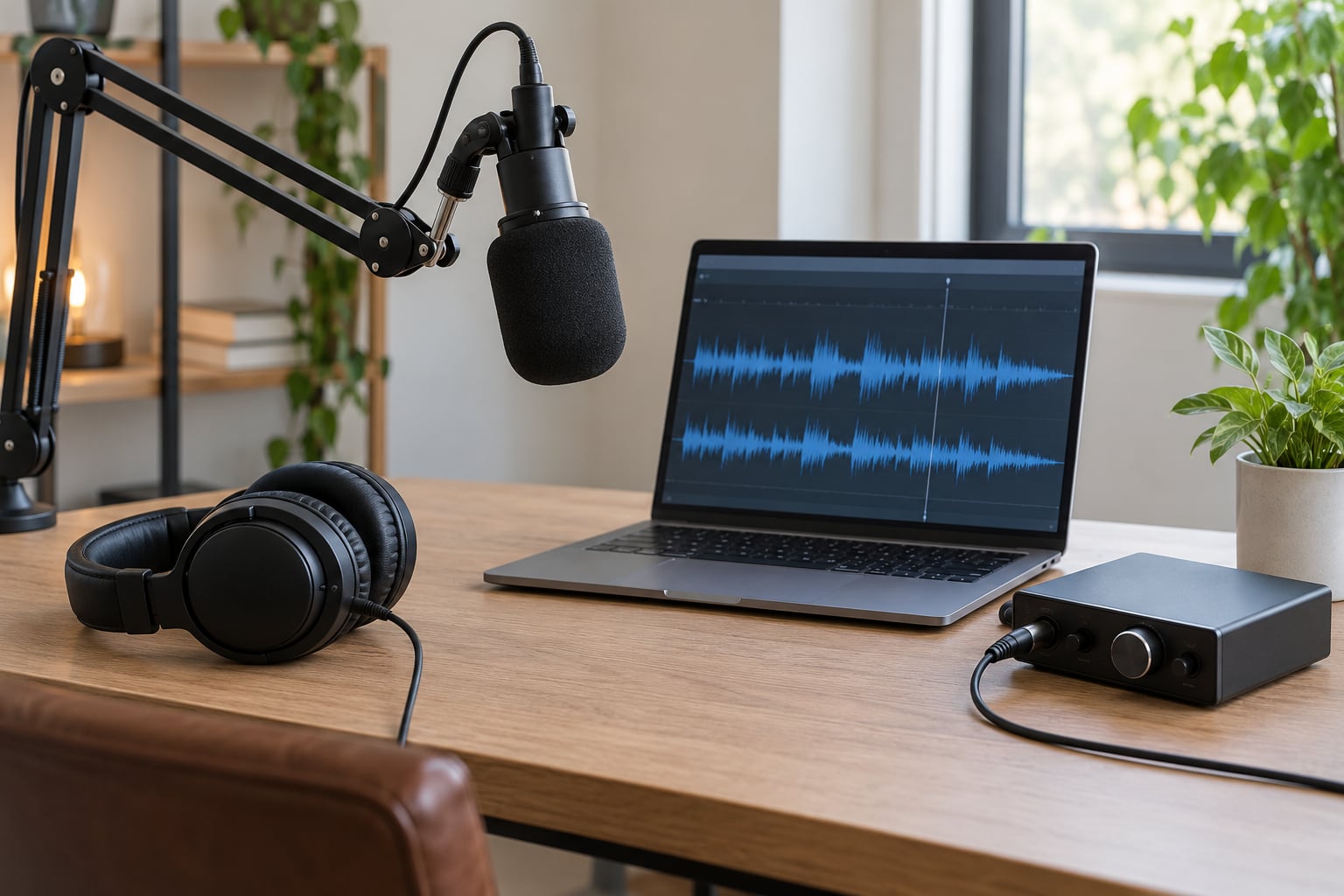
Yes, you can get a job in radio with no experience, and the route is more predictable than most people think. Volunteer or freelance at a small station, record real shows, and build a 90-second demo that sounds professional. Then apply for entry-level roles where that audio is the qualification.
The honest part is the timeline. Almost nobody walks into a commercial station and gets an on-air job cold. What happens instead is a ladder: unpaid or low-paid work at a community, student, hospital, charity or online station, a few months of real shifts, and then a move to something paid. Most beginners who stick with it land their first paid on-air slot somewhere between three and twelve months of showing up.
Below is the whole route, in the order that actually works.
Table of Contents
What You Need
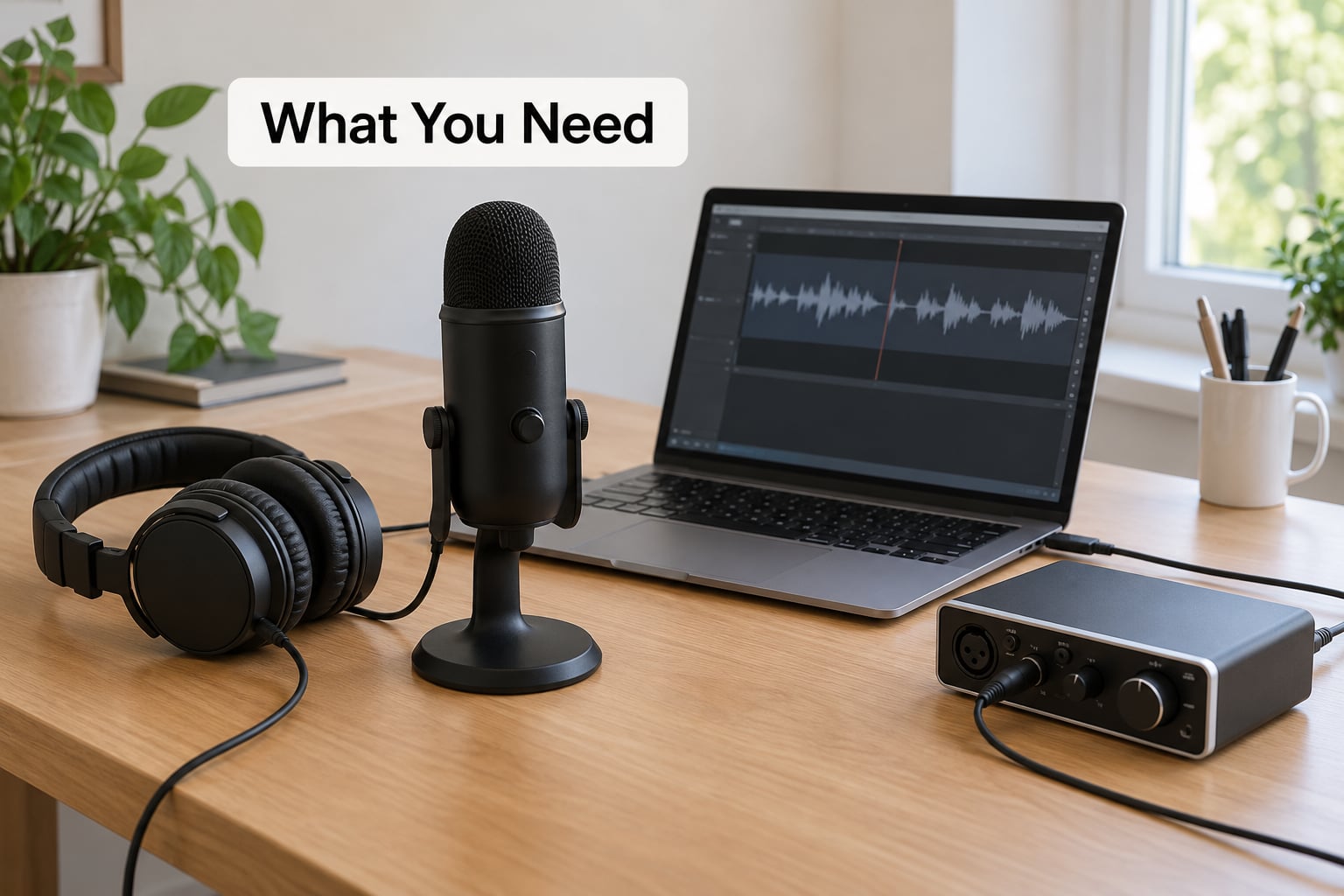
You need far less than the internet suggests. Nobody is going to ask a beginner for a studio, a licence or a CV full of previous stations. Here is the honest list.
- One target role. Not “radio”. Production assistant, board operator, podcast producer, news reporter, music assistant or on-air presenter. Pick one and learn what it involves.
- Reliable recording equipment. A USB condenser microphone, closed-back headphones and a laptop running free editing software will cover everything for months. A pop filter helps more than an expensive cable.
- A one-page resume written for audio. No broadcaster job titles to list yet, so lead with transferable work: live events, audio editing, writing deadlines, customer-facing shifts, team projects.
- A demo tape and a portfolio link. 60 to 90 seconds of clean audio plus a link where a station manager can hear more. This is the single thing that moves you up the pile.
- A shortlist of stations. Twenty local outlets you could actually reach, with a named contact for each. Small and specific beats big and generic.
Free software covers the learning curve. Audacity handles recording, cutting and noise reduction. Adobe Audition adds multitrack editing if you want it. Pro Tools is what commercial studios run on and most stations assume you can open, but plenty of beginners learn on Audacity and move across later.
Step-by-Step: How to Get a Job in Radio With No Experience
Choose a radio role you can prove
Beginners spread themselves thin by applying for everything. Choose one role and get specific about the skills it needs.
- Production assistant works alongside a broadcast producer, logging interviews, cutting clips, writing to a running order. Reliable, organised and tidy people land this first. It is the most common real door into commercial radio.
- Board operator runs the desk during a live show, starting and stopping items, firing carts and cues, and covering for the presenter if the mic drops. Technical focus, minimal on-air time.
- Podcast producer records and edits shows for brands and independent creators. Many podcasters started with no radio experience at all, and the edit skills transfer straight to stations.
- News reporter or newsreader needs research, clean copy under pressure, and an unbothered read. Local news desks are one of the few places that will take a voice with no broadcast background.
- Music assistant or researcher is a research-heavy role, usually at commercial stations. Great for people who know music deeply but do not want to be on air.
- On-air presenter is the hardest of these to get cold and the easiest to grow into, once you have a real show behind you.
Success signal: you can name three specific tasks in that role and one piece of evidence you could show for each. If you cannot, read the station’s own job advert and borrow its vocabulary for your resume.
Create a one-hour radio demo
Build one hour of material, then cut the best 90 seconds from it. That gives you somewhere to record from without the pressure of performing live.
- Record a prepared intro. Ten seconds of natural talk introducing a fictional or real show. No music underneath speech, no fading in from silence.
- Add a music bed. Two tracks faded in and out underneath a link, with music levels obviously lower than voice.
- Record an interview segment. Ask a friend one real question, let them answer for thirty seconds, then write a natural bridge. Fake interviews are obvious.
- Do a weather or news item. Read one item from a script you wrote yourself in broadcast style: short sentences, one idea per sentence, numbers spoken in full.
- Clean the audio. Trim silence, reduce hum, normalise levels so speech sits consistently. Nothing else matters as much as this step.
Send the demo as one file, unedited between sections. A station manager is listening for a voice, not a production budget, and clean speech in a plain room beats a beautifully mixed reel recorded on a cheap mic.
Success signal: someone who does not know you says the intro sounds like something they would put on air. That is the bar.
Build a small portfolio of broadcast work
One demo is a sample. A portfolio is proof you can be relied on repeatedly, and it is what separates a hopeful applicant from a working one.
Keep an audio folder for every recorded item: intros, interviews, ad reads, live-show segments, edited interviews for a podcast, outside broadcasts. Upload to a platform where the audio plays straight in the browser, then link it in your email signature.
Write short notes underneath each file: the date, the format, what you did. “Two-hour outside broadcast, three live interviews, recorded and edited on location” tells a station manager far more than the file name does.
Success signal: five pieces of audio with one-line notes each, all in one place you can send in a link.
Start with volunteer, freelance, or student work
This is where the actual experience comes from, and it is easier to find than people expect.
- Community radio. Usually volunteer-run, usually delighted to hear from new people. Email the station, ask to come to a meeting, offer two hours a week to start.
- Student and campus stations. If you are at college or university, this is the cheapest possible start. You learn on real equipment with a deadline every week.
- Hospital radio. Patient-request shows are staffed by volunteers and value a calm, warm voice more than a radio polish.
- Charity and event radio. Festival and charity stations often need presenters for a weekend with barely any training. Useful for building live confidence.
- Independent podcasts. Offer to produce an early show for a small creator. You get real episodes, real deadlines and a portfolio credit.
- Apprenticeships. In the UK, broadcasting apprenticeships are a funded route for school leavers and career changers, with the Bauer Academy and Global Academy commonly named. In the US, public, community and low-power FM stations and campus radio are the most accessible non-commercial entry points.
Offer concrete help rather than asking for a show. Sweeping the studio, logging music requests, building a spreadsheet of contacts, covering a shift on a Sunday: all of it gets you inside the building where the jobs are.
Success signal: you have a supervisor who will answer the phone if a station rings to check you.
Target stations that hire beginners
Do not only knock on the doors of the famous local stations. Recruiters at big stations expect a CV full of previous work. Small commercial stations, community outlets, hospital services, university stations and online-only stations hire people who are starting out, because they cannot afford to be picky.
Do the research before you write anything.
- Find every station broadcasting in your area, not just the ones you already know.
- Read the About and Team pages to find a station manager, controller or programme lead by name.
- Check the station’s social accounts to see how many shows it runs. More shows means more slots and more churn.
- Note whether their output is music-led, speech-led or local news-led. That tells you the format you should be auditioning for.
- For UK roles, check the Radiocentre job hub, Broadcast Jobs and the Young Audio Awards. In the US, check station websites, NPR member station listings and broadcast trade job boards.
Success signal: a spreadsheet of twenty stations with a named contact and a one-line note about each. Twenty is the number where the list stops feeling like work and starts producing replies.
Apply with a radio-specific portfolio package
How to get a job in radio with no experience comes down to the package, not the credentials. Send four things in one email and keep it under fifteen lines: what you are applying for, one sentence on your voice and availability, a link to your demo, and a link to your portfolio.
Tailor it. If the station runs a late-night music show, mention that you have hosted an ambient show and can cover a Friday night shift. An unchanged email sent to forty stations reads as forty emails sent to nobody.
Subject line: “Demo reel and availability for junior production assistant roles”. Not “Enquiry”. Not “Job application”. Make the person forwarding your email to a manager understand immediately that you are worth opening.
Follow up once, ten days later, with one sentence. Then stop. Persistence past two contacts is where goodwill runs out.
Success signal: replies, or at least forwards inside the station.
Prepare for interviews and auditions
Entry-level radio interviews are short, practical and less theatrical than people fear.
Expect to be asked how you would open a live show, how you would handle a caller with a complaint, what your music policy would be and why, and what other stations you listen to. Expect a read-aloud of two or three lines of copy you have never seen before, and possibly a live mic test where someone counts down and asks you to talk for ninety seconds.
Prepare three things in advance: a written intro you could read cold, a two-minute answer to why this station, and one example of something you produced or presented even unpaid. Presenters on stations regularly talk to candidates about social media, because the station wants a presenter who can build an audience, so bring a realistic idea of what you would post and how often.
Expect a trial shift, sometimes paid and sometimes not. Treat an unpaid trial as a single unpaid session, not an open-ended arrangement. If a station asks for a month of unpaid shifts with no end date in sight, that is a warning rather than an opportunity.
Success signal: an invitation to a trial, a follow-up call, or honest feedback you can act on.
Common Mistakes
Most rejections come down to a handful of avoidable things.
Applying with no demo. Fix: record ninety seconds this week, even in a bathroom with a duvet over the mic. Clean and short beats polished and absent.
Sending rough audio. Background hum and clipped levels get binned in the first five seconds. Fix: record in a soft room, keep the mic a hand’s width away, and normalise before exporting.
Submitting a ten-minute reel. Nobody at a station has that morning. Fix: 60 to 90 seconds, links or timestamps for the longer version.
Chasing presenter jobs only. Off-air roles carry far more entry points and move you onto air later. Fix: apply for production assistant, board operator and podcast roles as well.
Ignoring small stations. A station across town with four presenters is a better first employer than a network that hires from an existing roster. Fix: include the small and online outlets in every batch.
Sending applications to a shared inbox. hello@ addresses rarely reach a decision maker. Fix: find a named person and address them directly.
Ignoring the format. Auditioning a music show with heavy chat in a station that plays uninterrupted current music reads as a mismatch. Fix: listen to an hour of the station before you record anything.
A few finishing tips. Keep a record of every shift, date and show name you work, because you will forget. Ask permission to record your own shows early, and set expectations about pay and hours before you start rather than after. Treat every volunteer shift as a trial of the paid job you want, because from the station’s point of view, that is what it is.
Frequently Asked Questions
Can I get a job in radio with no experience?
Yes. Stations hire beginners regularly, almost always through the off-air roles first: production assistant, board operator, runner, podcast producer and music researcher. Those jobs need reliability and basic audio editing rather than credentials. Volunteering at a community, student, hospital or online station gives you real shifts to put on your CV, and a clean 90-second demo turns that into an application a hiring manager can actually act on.
Do I need a radio degree to work in radio?
No. Most stations care about demonstrated ability rather than qualifications, and plenty of working presenters started with no formal training. A degree in broadcasting, journalism or media helps, and funded UK apprenticeships and academy schemes exist for under-24s, but they are one route among several. Volunteering, a portfolio of recorded work and a good demo will carry you further than a qualification you have never practised on.
What radio jobs are easiest to get without experience?
Off-air roles are the easiest, and they lead to on-air work later. Production assistants, board operators, studio runners, podcast producers and sales or administration staff are hired far more often than presenters, because the duties are teachable and the hiring risk is lower. Community and student stations are the quickest route into any of them, and small commercial stations and independent podcasters often move faster than large networks.
What equipment do I need to make a radio demo?
A USB condenser microphone, closed-back headphones, a pop filter and a laptop are enough. Free software such as Audacity handles recording, editing, noise reduction and levelling, and Adobe Audition is a reasonable next step when you want multitrack work. Skip the mixer and the interface at first. What a station listens for is a voice with clean levels, not studio hardware.
How do I find radio stations hiring beginners?
Search community, hospital, student, campus and online stations in your area, then read their About and Team pages for a named station manager or programme lead. Commercial job posts appear on industry hubs such as the Radiocentre and Broadcast Jobs in the UK, and on station websites and broadcast trade boards in the US. LinkedIn works well for spotting who has just been promoted into an entry-level role.
How long does it take to get a job in radio?
Plan for three to twelve months of consistent work before regular paid shifts. Three to six months of one or two sessions a week at a community or online station is the fastest route most beginners find, because it gives you real hours to reference. A faster route exists for career changers with transferable skills and existing contacts, but the audio demo and the hours still have to exist before anyone can hire you.
What to do today
Start with the demo. Set up the microphone, record ten seconds of natural talk, clean it up in Audacity and listen to it back. That single afternoon removes the most common reason beginners get rejected, and everything else on this list depends on it.
Then make one email to one small station near you, offering help rather than asking for a show. Send it this week.