Here is how streaming changed radio promotion in one line: it moved the gatekeeper. A record used to reach listeners only when a station decided to play it, and getting there meant servicing a small number of DJs and hoping for an add. Now every track is available to every listener the moment it goes live, so visibility depends on playlists, presenters and the small actions listeners take when they like something enough to keep it.
The practical consequence is that a station can no longer promote a show by asking people to tune in at a certain hour. In 2026, promotion means being findable, searchable and worth a follow, all week, on whatever device the listener already has in their hand.
Table of Contents
- How Streaming Changed Radio Promotion
- What Is Radio Promotion Now?
- Why Streaming Changed the Way Stations Reach Listeners
- How the Path From Discovery to a Regular Listener Changed
- How Streaming Changed Radio Promotion in Practice
- What Has Not Changed About Effective Radio Promotion
- What Promotion Tactics Work Best for Streaming Radio?
- How Stations Measure Promotion Beyond Broadcast Ratings
- What Should a Small Radio Station Do First?
- Frequently Asked Questions
- Did streaming replace radio advertising?
- Which platform should an independent radio station promote first?
- How can short radio clips help attract new listeners?
- Are streaming playlists useful for promoting a radio station?
- Should radio stations promote concerts and live events online?
- What is the most important radio promotion metric for streaming?
- Conclusion
How Streaming Changed Radio Promotion
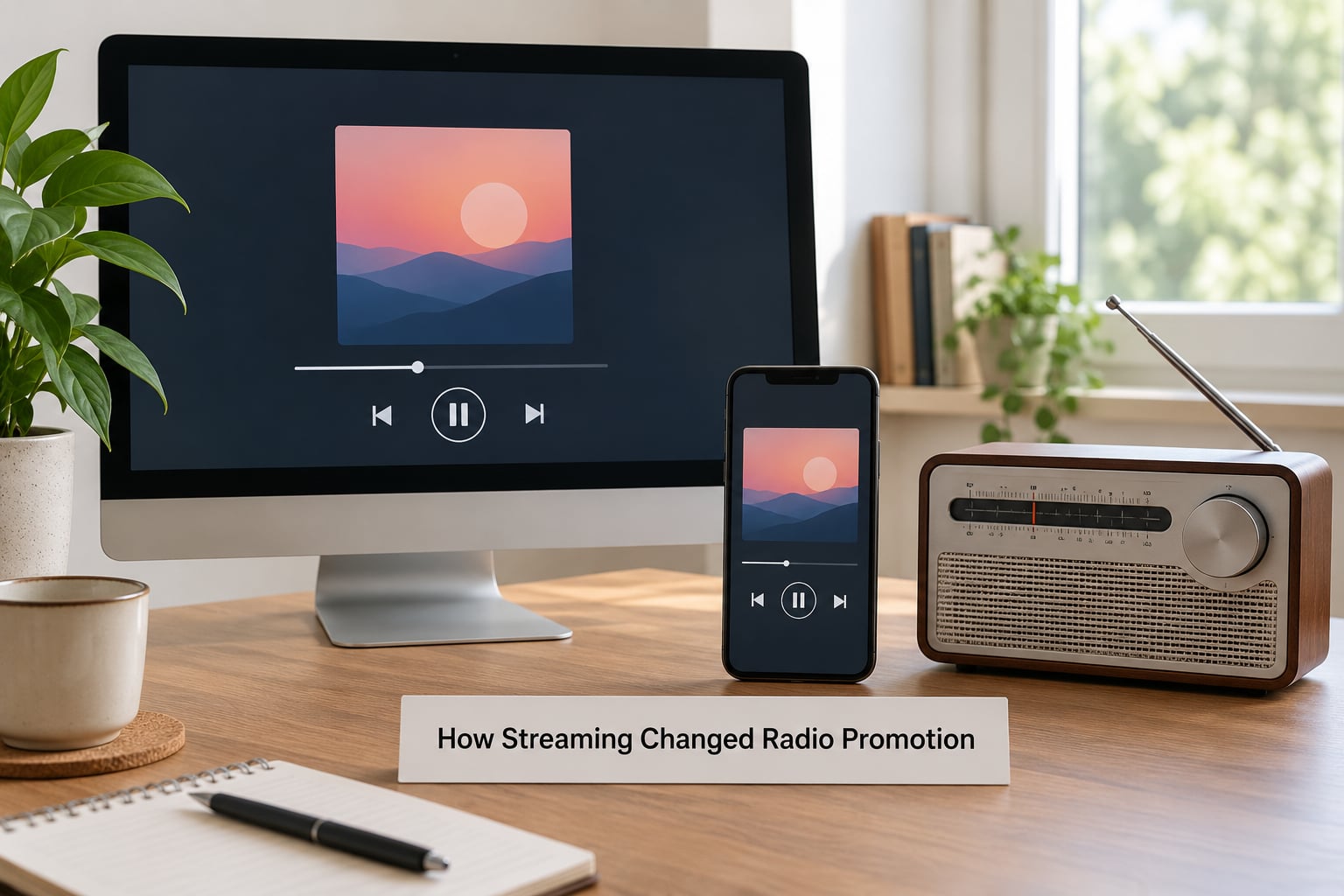
How streaming changed radio promotion is easiest to see by looking at what a station is actually asking listeners to do. On FM, that ask was small and fixed: be in range, find the frequency, press listen. Online, the ask is a series of small decisions, and every one of them can fail or convert.
Three things shifted at once. The audience stopped being a catchment area and became a following. The schedule stopped being the product and became the hook. The measurement stopped being a weekly reach figure and became a set of behaviours you can watch in near real time.
None of this made broadcast radio smaller in a single dramatic step. It made the promotion job a different job, one with more channels and fewer assumptions about who is listening right now.
What Is Radio Promotion Now?
Radio promotion today is the work of making a station easy to find, easy to recognise and easy to return to. It covers station branding, presenter-led content, social discovery, events, newsletters, podcasts, playlists and direct communication with listeners, spread across both broadcast and digital.
In practice it splits into four jobs that used to be one:
- Reach — getting in front of people who have never heard the station.
- Recognition — making sure they know which station and which show they are hearing.
- Conversion — turning a one-off stream into a saved show, a follow or an email address.
- Retention — giving regular listeners a reason to come back on a Thursday as readily as on a Saturday morning.
That last one is where most stations are weakest. A post that reaches a lot of people and produces no return visit is a campaign, not a promotion programme.
Why Streaming Changed the Way Stations Reach Listeners
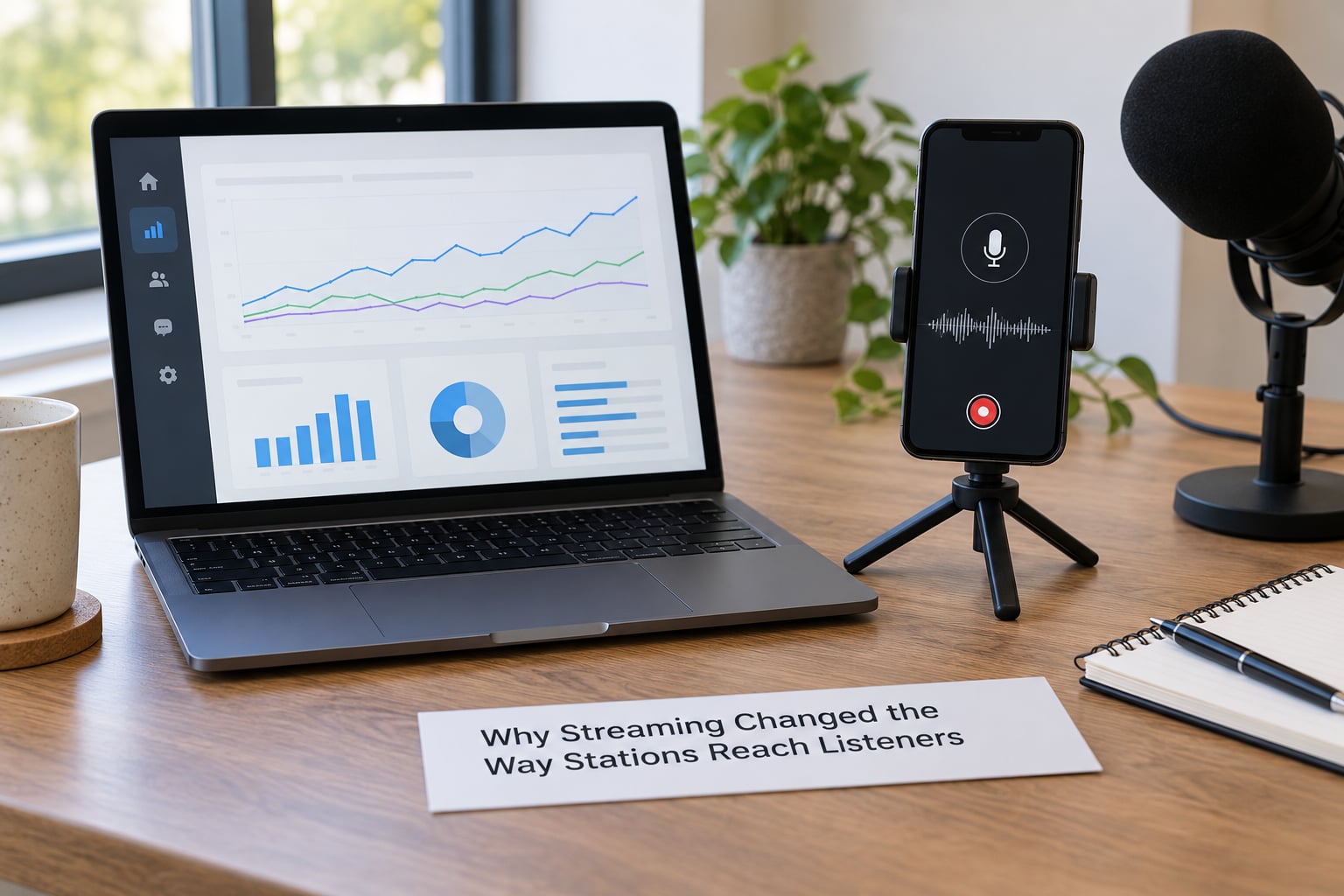
Five forces did it, and they pulled in different directions.
Global availability replaced a service area
A listener in another county, or another country, used to be a rounding error in the ratings. Now a show archive from a small station can sit alongside national output in a search result, and a guest can be promoted to a far wider audience than the transmitter ever covered.
Always-on access replaced a fixed slot
On-demand listening removed the apology for missing the broadcast. A station that once had to persuade people to be somewhere at 6pm can now hand them the episode, the set or the interview whenever they happen to look.
Platforms fragmented the audience
Listeners are spread across streaming services, smart speakers, car systems, podcast apps and short-form video. Each surface has its own format, its own length and its own idea of a good clip, so one piece of audio rarely works everywhere unchanged.
Content became shareable in pieces
A three-hour show can be trimmed into a strong sixty seconds. That clip can travel further than the full broadcast ever did, and it travels to people who have no idea a radio station exists yet.
Actions became measurable
This is the quiet one. On air, a station could count listeners as a single number for the week. Online, a station can see which clip was played, which was skipped after four seconds, and which one people came back for.
How the Path From Discovery to a Regular Listener Changed
The old path was short and mostly out of the station’s hands: hear the station in the car, remember the name, find it again on the dial. The new path is longer, and most of it is now visible.
- Discovery — a clip, a playlist, a search result or a recommendation, usually not from the station’s own channels.
- First listen — long enough to form an opinion. Under a minute is where most losses happen, and a good first thirty seconds decides most of them.
- Recognition — the listener needs a name they can type, follow or ask a smart speaker for. Stations with a distinctive, spellable name convert noticeably better.
- Return visit — a bookmarked show page, a followed presenter or a weekly reminder turns a stranger into a habit.
- Deeper engagement — requests, guest pitches, event attendance, newsletter sign-ups. This is where a station starts to build a relationship rather than a reach number.
Each step is a place promotion can be lost. The fix is rarely more posting; it is a clearer ask at the step that is actually failing.
How Streaming Changed Radio Promotion in Practice
Side by side, the two models are not really comparable. They optimise for different things.
| Element | Traditional radio promotion | Streaming-era promotion |
|---|---|---|
| Gatekeeper | Programme director and on-air presenter | Editorial curators, algorithms and the listener’s own feed |
| Core tactic | Servicing DJs, follow-up calls, riding an add rotation | Submitting to playlists, pitching editors, publishing on your own pages |
| Main metric | Spins, adds and weekly reach | Saves, starts, monthly listeners, follower growth |
| Timescale | One shot, then the next record | Always-on, with old content still working |
| Where the audience is | A transmission area | Search, social feeds, apps, cars and smart speakers |
| Weakest point | Hard to reach anyone outside the area | Easy to post constantly and convert nothing |
Here is what that looks like on a Tuesday morning at a small station:
- Short presenter clips. Sixty seconds of a host setting up a track, with the reasoning kept in, travels far better than a bare song clip. The host is the reason to click.
- Shareable interviews. A guest answer cut to its useful forty seconds, posted with a name and a question in the caption, gives search engines and social feeds something to hold on to.
- Searchable show pages. A dated archive with a real title and a short description is the single most under-used asset most stations own. People search for a show they half remember hearing.
- Playlists. Stations increasingly publish running playlists for their shows, which turns a broadcast into a reference listeners come back to.
- Remote event promotion. A gig or a live broadcast works as a reason to check the stream, not just a thing to attend.
- One call to action. Ask for the follow, the subscribe or the calendar reminder, not all three at once.
The pattern is consistent: a short clip earns attention, a searchable page earns the return visit, and a single clear ask earns the follow.
What Has Not Changed About Effective Radio Promotion
Reach got easier to buy and harder to trust. Streaming widened the door without making the room any better, and that is the part stations get wrong most often.
Distinctive programming still matters more than distribution. Two stations posting the same clip will get different results, because the listener decides within seconds whether this is a show they recognise. Presenter credibility is the mechanism: on air and on a phone screen it is the same thing, and a host who cannot be bothered with the written version is usually obvious.
Music selection is still an editorial judgement. People notice when a station plays the same forty tracks in the same order as their own algorithm. Broadcaster communities have been blunt about this for years: listeners want radio for material that does not exist anywhere else, and they notice when a stream simply re-serves music they did not ask for.
Consistency still beats cleverness. A station that publishes something worth finding every week builds a returning audience; a station that posts something brilliant once a quarter builds a headline.
What Promotion Tactics Work Best for Streaming Radio?
The tactics that hold up share one property: each one leaves the listener with something specific to do next.
Searchable show pages with real descriptions
Titles written for a person, not a content management system. If your show is called “The Morning Fix”, “Station Name Morning Fix” beats “Episode 14” every time.
Platform-native audio and how streaming changed radio promotion output
A clip cut for feeds is shorter, front-loaded and captioned. Artists working in music marketing forums report the pattern repeatedly: the shorter, single-purpose version travels, the long version does not.
Short-form video as the newest discovery surface
This is where a station with an hour of daily material can out-produce a much larger network. Fifteen seconds of a presenter reacting to something genuinely surprising costs nothing and reaches people who will never touch a frequency.
Community invitations
Ask listeners for requests, guests and stories. A station that publishes a listener’s name on air gets more of the same behaviour, and it costs one mention.
Artist and partner relationships
Servicing still exists; it just moved. The equivalent of a well-made DJ drop is now a well-made pitch to an editor, a curator or a podcast host, and the follow-up is still the part most people skip.
Email and newsletters
Still the only audience a platform cannot take away. Everything else is rented reach.
Events
Small live sessions give a stream a time and a place, which is exactly what an always-on feed lacks.
How Stations Measure Promotion Beyond Broadcast Ratings
Broadcast ratings answer one question: how many people were tuned in? Online promotion needs more of them, and each one has a different meaning.
| Measure | What it tells a station |
|---|---|
| Stream starts | Whether the clip or show page holds attention past the opening |
| Listening time | Whether people stay once they arrive, which is the honest quality signal |
| Saves and follows | Whether the listener expects to come back |
| Search appearances | Whether the archive is working as a reference others can find |
| Newsletter sign-ups | Audience a platform cannot take away |
| Event attendance or RSVPs | Whether promotion converts into real-world attention |
| Skip rate | Where in the audio you lose people |
Radio’s own measurement survives, but as one line among several rather than the headline. A reach figure still tells you how many people heard the broadcast; it no longer tells you what they did next.
What Should a Small Radio Station Do First?
If the budget is a few hours a week, work through this in order.
- Write the audience promise in one sentence. What does a listener get that they cannot get anywhere else? If the answer is vague, every other step will be vague too.
- Choose one discovery channel and stay there. Pick the short-form video platform your actual listeners already use, not the one with the best numbers. Two channels done properly beat five done occasionally.
- Build proper show pages. Real titles, short descriptions, dates, a cover image and a direct link to the stream. This is the one asset that keeps working after the promotion stops.
- Reuse the best material. Keep a running list of the segments that performed well and cut them up rather than starting from scratch each week.
- Review behaviour, not reach. Once a month, look at starts, listening time, follows and sign-ups, then change the one thing that is weakest.
Small stations do not need more output. They need one repeatable habit tied to one listener action.
Frequently Asked Questions
Did streaming replace radio advertising?
No. Broadcast advertising still buys reach that streaming cannot easily match, particularly local audiences, live sport sponsorship and regional brands. What changed is where many budgets and much of the audience attention went, and how performance is judged. Stations that keep a local advertiser on air while also promoting digitally tend to be steadier than stations that assume one replaces the other.
Which platform should an independent radio station promote first?
Start where your existing listeners already spend time, not where the platform is growing fastest. If your audience finds you on short-form video, promote there and send people to your own show pages. If they listen through a car system or a smart speaker, make sure the station is easy to name and ask for by voice, because that is often the only test a listener will pass.
How can short radio clips help attract new listeners?
Short clips reach people who would never tune in, and they work because the presenter is doing the selling. A sixty-second piece that sets up a track and explains why it matters gives a stranger a reason to stay, where a bare music clip gives them nothing. The clip should end by pointing somewhere, such as the show page or the live stream.
Are streaming playlists useful for promoting a radio station?
Yes, though they work differently from how they work for a record. Curators place individual tracks, so a station’s clearest route is having specific, well-described music it genuinely wants to recommend and giving editors a clean link to it. Published station playlists serve a different purpose, giving listeners a reference for a show they have already decided to catch.
Should radio stations promote concerts and live events online?
Yes, because events give an always-on stream something with a time attached. A ticket link or a calendar reminder turns passive awareness into a plan, and the same event draws in people who were not regular listeners. The promotion works best when the stream is framed as the accessible version, not as a substitute for being there.
What is the most important radio promotion metric for streaming?
Saves, or follows, on a show page. Reach tells you who saw the promotion; listening time tells you whether the content held; saves tell you whether anyone intends to come back. A station that watched only reach would keep producing posts that are seen and then ignored, which is the most common failure in streaming-era promotion.
Conclusion
How streaming changed radio promotion comes down to one line: the station used to wait to be found, and now it has to be worth finding. The reach is more measurable, the feedback is faster and the competition for a listener’s attention is far heavier than it was on FM.
Start by choosing one audience, one streaming destination and one repeatable habit tied to a clear listener action. A follow, a saved show page or a newsletter sign-up, asked for once and delivered every week, will do more for a station than a month of scattered posting.