Learning how to do a radio interview as a guest comes down to four things: know the show, arrive with three to five talking points instead of a script, speak in short listener-friendly answers, and accept that live radio has no re-take. Most first-time nerves come from not knowing what the segment actually involves, so here is the whole process from booking to follow-up, roughly two hours of preparation spread across the week before and the hour before you go live.
The people who sound good on air are rarely the most polished speakers. They are the ones who know what they want to say and have practised saying it out loud once or twice. Everything below is built around that, whether you are going into a studio, dialling in from home, or linking into a remote feed for an online station.
Table of Contents
- What You Need
- Step-by-Step: How to Do a Radio Interview as a Guest
- Common Mistakes
- Frequently Asked Questions
- How long should I talk during a radio interview?
- Do I need to prepare written notes for a radio interview?
- What should I wear for a radio interview?
- How do I answer a question when I do not know the answer?
- Can I correct a mistake after a live radio interview?
- How should I prepare my voice before going on air?
- Conclusion
What You Need
Before you say yes to a slot, get four things in place. If any of them are missing, ask the producer rather than guessing.
- A short brief on the show. Format, live or pre-recorded, running time, clock time, and who else is appearing. Send this in writing so you have something to work from.
- Three to five talking points written as single words or short phrases on one side of A4. Not sentences. Full sentences are what make people read like a script.
- Two or three short stories or examples you can drop into an answer. A specific example does more work than another point of argument.
- A media kit with a one-paragraph bio, a headshot, any relevant dates or links, and your contact details, ready to send the moment a host replies.
Hosts on community and local radio say the same thing repeatedly: the guests who cause friction are the ones who arrive without having listened to a single episode. Ten minutes of listening is the cheapest preparation available.
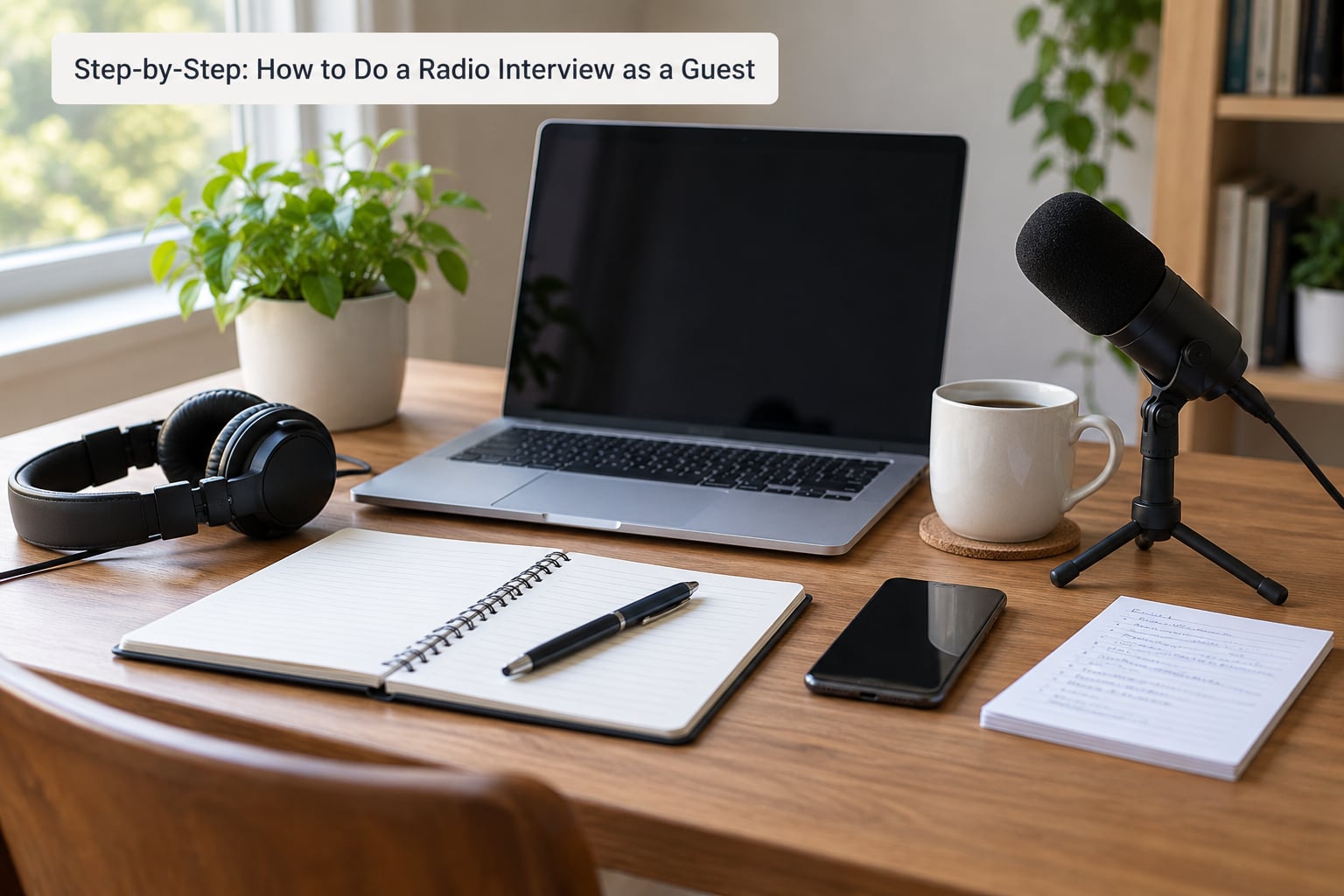
Tech depends entirely on where you are appearing. In a studio you usually need nothing but yourself. Remote and phone-in interviews need a quiet room, headphones, a stable connection and a charged phone as a backup line. You also want a glass of water within reach and a notebook, because you cannot read from a screen without sounding like you are reading.
Step-by-Step: How to Do a Radio Interview as a Guest
Step 1: Understand the Show and Host
Listen to at least three recent episodes before you prepare a word. You are trying to learn the host’s rhythm: how long they ask, how quickly they talk, whether they argue or encourage, and what they never go near.
You also want to know the practical details. Is it live or recorded? Recorded segments can often be corrected or re-recorded, so the stakes drop immediately. A live slot does not. How many other guests are in the hour? Who else is on, and will they be in the studio or down the line?
Then listen for gaps. Hosts love being handed a subject they have not covered. Someone who arrived with a clear angle that nobody else is pitching that week usually gets more airtime than someone who offered a vague list of topics.
Step 2: Prepare Clear Talking Points
Write down three to five points you genuinely want to land. One phrase each. If a point needs a paragraph to explain, it is really two points.
Attach a concrete example to each one. “Most people stop exercising because the plan is unrealistic” is a point; “I coached a lad who was training for a charity three peaks, and we cut his sessions from five days to two” is the example that makes the point stick in someone’s head while they’re driving.
There is a debate here worth settling. Plenty of guest guides tell you to email eight to fifteen sample questions to the producer. Plenty of hosts say the opposite, that they never want a list of exact questions handed to them because it reads like an audition. The workable middle is to send angles and key points, offer sample questions as a courtesy, and make it clear the host’s own questions are welcome. Ask what they prefer rather than assuming.
Step 3: Check Your Equipment and Environment
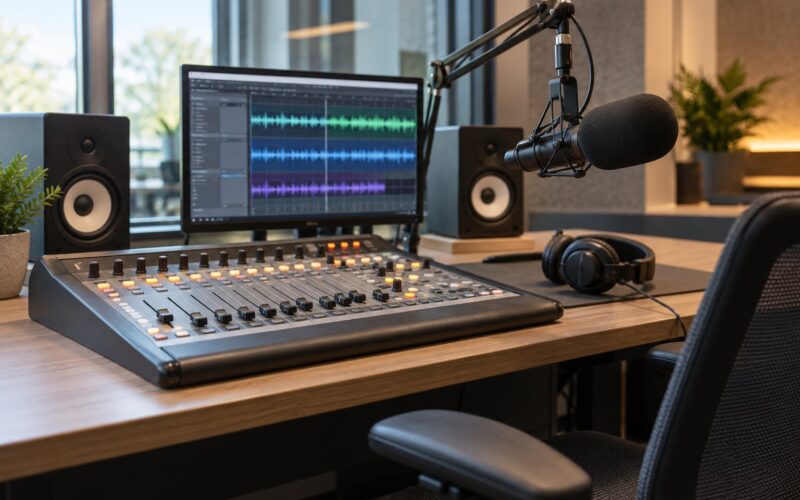
If you are in the studio, the producer handles the levels. Expect a short soundcheck where they ask you to speak at your normal volume, adjust your distance from the microphone, and check that you can hear the presenter through your headphones.
If you are remote, the setup is your job. Headphones matter most because without them you talk over your own voice arriving back with a delay. Sit somewhere quiet with soft furnishings rather than a tiled room or an open-plan kitchen. Keep the phone or laptop on charge, and check your connection with a two-minute video call beforehand.
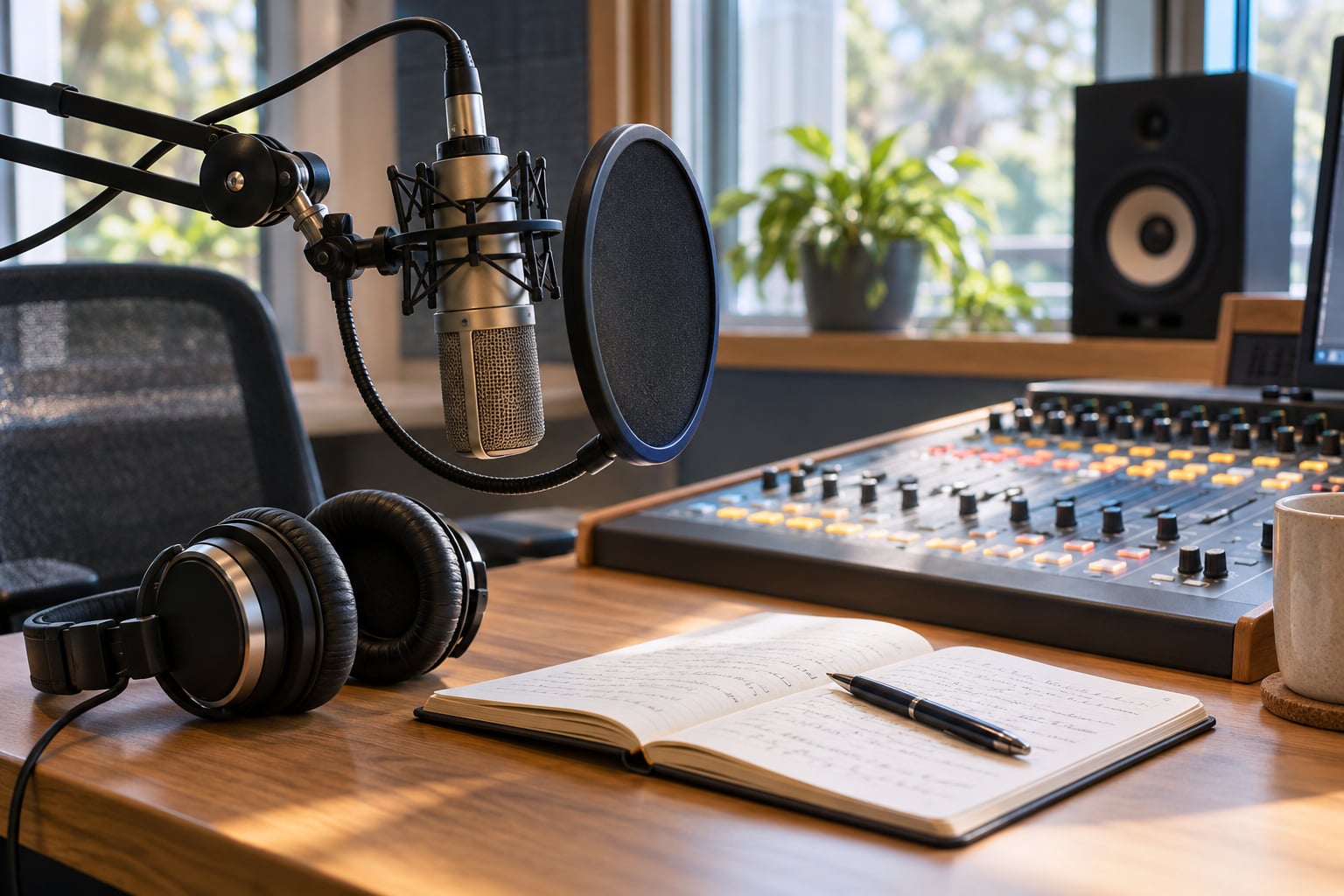
Test the microphone for mouth noises. Many microphones sit close enough that the plosives and lip smacks pick up clearly, which is why a pop filter exists. Turn the gain down a touch rather than leaning into the mic to be heard, and keep a consistent distance rather than drifting in and out.
Have a backup plan. A second phone number the producer can dial if the first connection drops, a mobile hotspot if your broadband is unreliable, and an agreement on what happens if you cannot connect at all.
Step 4: Practice Speaking for Radio
Record yourself answering the three questions you think are most likely. Play it back on a small speaker rather than headphones, because radio is a listen-without-watching format and you need to know how you sound to someone who cannot see your face.
Look for the things that irritate listeners. Long openings before you reach the point. Filler words. Restating the question before answering it. Speed, especially when you get to something you care about.
Then cut. One idea per answer, ideally fifteen to thirty seconds. That feels impossibly short when you are used to writing, and it is exactly the right length for a two-minute talking point with a host who is watching the clock.
A couple of dry runs genuinely help, and this is the step most guests skip. Someone who flubbed a live radio slot described rambling, repeating themselves and a voice that cracked, all while holding heavy notes. Recording yourself is what turns those notes into something you can actually retrieve under pressure.
Step 5: Answer Questions Clearly on Air
Let the host finish the question. Then take one breath before you speak. That pause feels like ten seconds to you and sounds like confidence to the listener.
Answer the question that was asked. If the host has misread your point, do not fight it. Say what you actually mean in a sentence or two, and let the corrected version stand on its own.
A reliable structure is hook, point, example, takeaway. Open with the answer, support it with one short example, and close with the line you want repeated. It works for every subject from charity work to football.
Have a phrase ready for when you do not know something. “I don’t have that figure in front of me, but I can send it to you afterwards” is a complete and professional answer. Struggling audibly for twenty seconds is not.
When you slip, correct it and move on. Say “let me put that another way” or “that came out wrong, what I meant was”. Live radio carries on. Listeners forgive a stumble; they do not forgive a guest who apologises for a minute.
Step 6: Wrap Up Professionally
Plan your exit before you go in. The host will ask how to wrap up, and a rehearsed sign-off sounds better than a trailing sentence about “so, yeah, that’s me”.
Use the last third of your time to restate your single most useful point in a different way, thank the host by name, and mention any detail you have cleared in advance, such as a date or a website. Do not read contact details slowly on air unless the host asks; they will say them over the back announcement instead.
Then follow up within a day. Thank the producer, send anything you promised, and ask when the show publishes clips or an archive. Hosts who receive a fast, tidy follow-up are noticeably easier to book a second time.
For a pre-recorded slot, check whether you can review anything before broadcast. Many producers will let you flag a genuine factual error, though few will allow an edit on tone.
Common Mistakes
Almost every difficult radio interview comes down to one of these, and every one of them is fixable in the hour before you go live.
Speaking too quietly or drifting off the mic. Radio has no visual feedback for the listener. If you sound like you are leaning away from the microphone, they assume you are unsure. Keep a fixed distance and project slightly more than feels natural in the room.
Overexplaining. You know the subject. Your listener joined the show four minutes ago. Give the headline, one example, and stop. Hosts can always ask for more, and they rarely do if you left room.
Vague answers. “It varies depending on the circumstances” gives a listener nothing to remember. A number, a name or a date turns the same idea into something reportable.
Ignoring the format. A ten-minute local news segment and a two-hour live talk show are completely different jobs. Ask how long your slot actually is and shape your points to fit it.
Failing to test the setup. Remote interviews die from echo, background noise and level mismatches where the guest is quieter than the host. A two-minute test call catches nearly all of it.
Reading from a script or a screen. Listeners hear it immediately as a voice that stops being a person. A one-page list of phrases is fine. Full paragraphs are not.
Chasing a correction. Once you have corrected a mistake clearly, the segment is over. Repeating the correction makes the slip the memorable part.
One more worth naming: treating nerves as a sign you should not be there. Everyone who works in radio has had a bad segment. The difference between a debut that felt shaky and a debut that felt excellent is usually nothing more than a minute of breathing before the red light came on.
Frequently Asked Questions
How long should I talk during a radio interview?
Aim for 15 to 30 seconds per answer and let the host control the overall length. In a longer talk slot you will speak more, but still in short blocks. If you are in a rigid news segment, your total contribution may be under two minutes, so front-load your main point. Hosts watch the clock closely and will cut you off politely but abruptly if you overrun.
Do I need to prepare written notes for a radio interview?
Yes, but keep them to one side of A4 with single words or short phrases, never full sentences. Notes are there to jog your memory when the pressure hits, not to be read aloud. Practise enough that you can deliver your three to five main points with the page face down. If you cannot speak without looking, you are memorising rather than preparing.
What should I wear for a radio interview?
Wear what you would wear to a meeting or a presentation in your field. Nothing noisy: no jangling jewellery, no stiff collars against a microphone, no rustling fabric. Audio picks up every movement, so soft, quiet fabrics win over crisp cotton. Choose clothes you can sit in comfortably for an hour, because you will be fidgeting more than you expect under studio lights.
How do I answer a question when I do not know the answer?
Say so plainly and offer to follow up. A clear line like I do not have that figure to hand, but I can send it to you this afternoon is a complete answer and sounds professional. Listeners forgive it easily. What they notice is the fifteen seconds of audible searching that usually comes before the honest answer. Guessing on air is the only genuinely damaging option.
Can I correct a mistake after a live radio interview?
You can correct it on air while it is still happening by rephrasing and moving on, but you cannot re-take a live segment. After transmission, contact the producer and ask about a correction. Pre-recorded interviews are different: many producers will let you flag a factual error before broadcast. Expect no change on tone or on an opinion you expressed clearly, only on things that are simply wrong.
How should I prepare my voice before going on air?
Warm up with a few minutes of ordinary talking or reading aloud, then drink some water. Avoid milk, coffee and very cold drinks straight beforehand. On arrival, sit quietly for a minute and take slow breaths from your diaphragm rather than your chest, because shallow breathing is what makes a nervous voice sound thin and high. Do a short level check with the producer before the red light comes on.
Conclusion
The whole process fits in six moves: understand the show, reduce your material to three to five points with an example attached, check your setup, record one practice answer, answer directly and briefly, then follow up the next day. Most of the confidence people describe after a good segment is just those steps completed in order.
Start with the first one. Find the show, listen to three episodes, and note the running time. That single hour of listening will tell you more about how to do a radio interview as a guest than any amount of generic advice.