You find your radio voice by recording yourself, diagnosing the one thing holding you back, and drilling it on a schedule for about a month. It is not a trick and it is not a special kind of throat. It is warm breath support, clear diction, an even pace and sentences you actually finish.
That sounds modest, but it is exactly what separates a presenter people stay tuned for from one they quietly scroll past. Radio has no face to judge you on, so the voice carries everything: warmth, authority, humour, nerves. This guide walks through how to find your radio voice in seven steps, then the fixes for the mistakes that trip up most beginners.
Table of Contents
What You Need
You can begin tonight with what you already own. The full kit only matters once the technique is in place, and putting it in the wrong order is the most common wasted expense in this hobby.
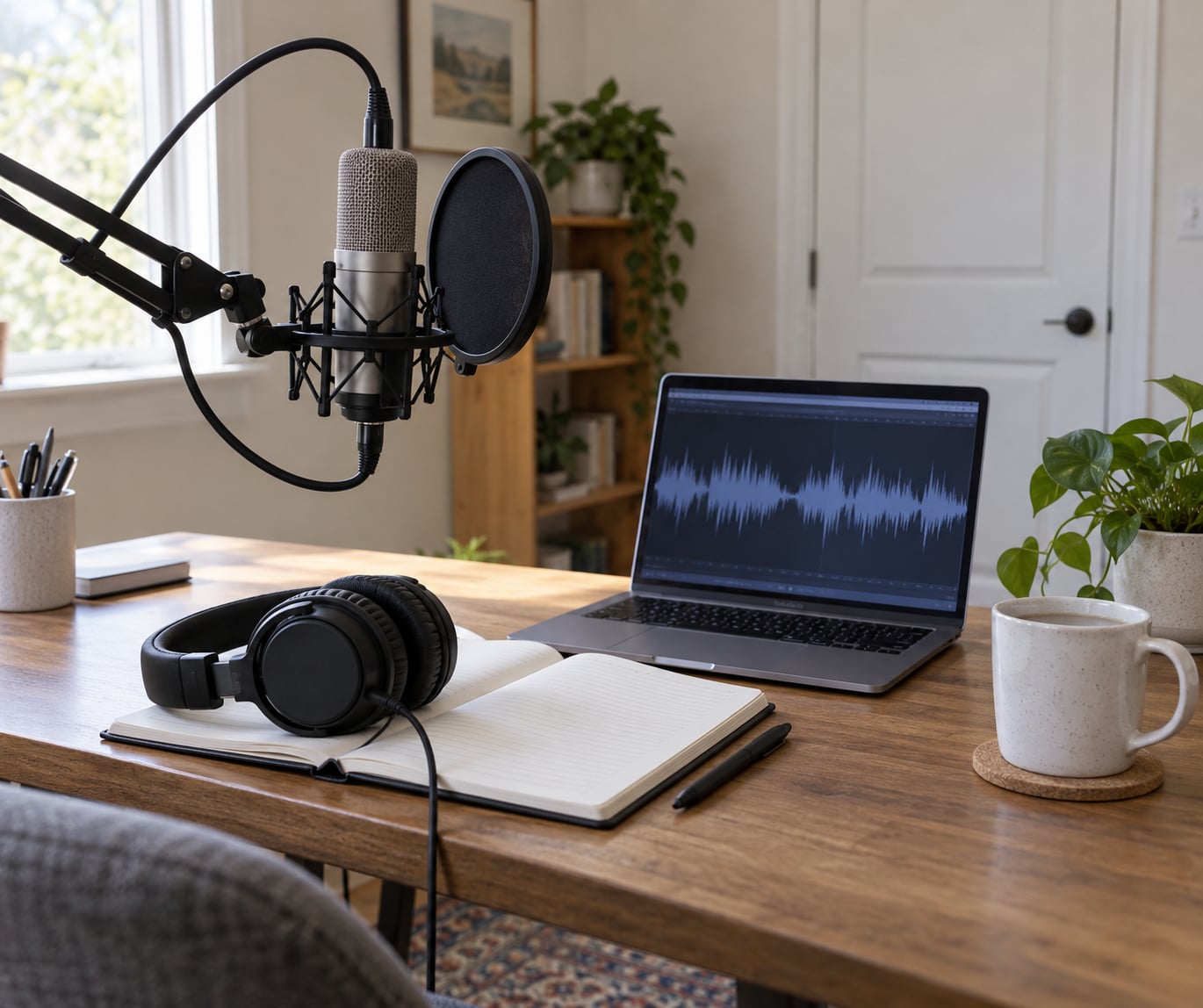
- A quiet room. A bedroom beats a living room. Close the door, kill the extractor fan if you can, and tell the house what you are doing for ten minutes.
- Any recorder. The voice recorder app on your phone is fine for the first fortnight. When you outgrow it, Audacity on a computer gives you two tracks to compare and takes about ten minutes to learn.
- Headphones. Cheap closed-back ones are enough. Their job is to let you hear what you actually sound like, not to sound good to other people.
- A script you wrote. Ninety seconds of your own words. Somebody else’s writing always shows in the delivery, which is a distraction when you are trying to hear yourself.
- A pop filter. A few pounds for the cloth-on-a-ring type. It kills the breath thump on hard P and B sounds more effectively than any setting on the mic.
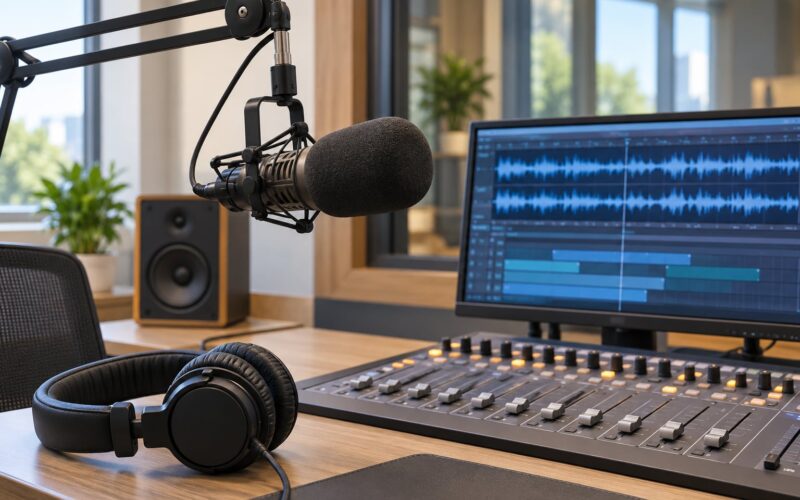
- A microphone. Optional for step one and two. A USB condenser handles most home practice; a dynamic mic is the one to reach for in an untreated room with a lot of traffic noise.
- Warm water. Not hot, not cold. Room temperature is what your throat expects, and caffeine plus milk before a session is a reliable way to thicken the mucus.
Step-by-Step: How to Find Your Radio Voice
Choose a Format That Fits You
Pick the kind of show you actually want to be doing, because the format sets the delivery you are aiming at. Practising the wrong one wastes weeks.
A breakfast update is short sentences, high information density and a pace around 160 words a minute. Everything is time-critical and you finish on a downward note because something is about to happen next.
A music show leans on personality: longer phrases, more space between them, and a willingness to stop talking and let the track breathe. A specialist feature is closer to documentary narration, so slower, warmer and more textured.
An interview is the hardest to fake, because you are doing maybe 60 per cent of the talking and your job is listening hard enough that the question you ask next comes from what the guest just said. Pick one, write three links for it, and use that as your practice material for the next month.
Record an Honest Baseline
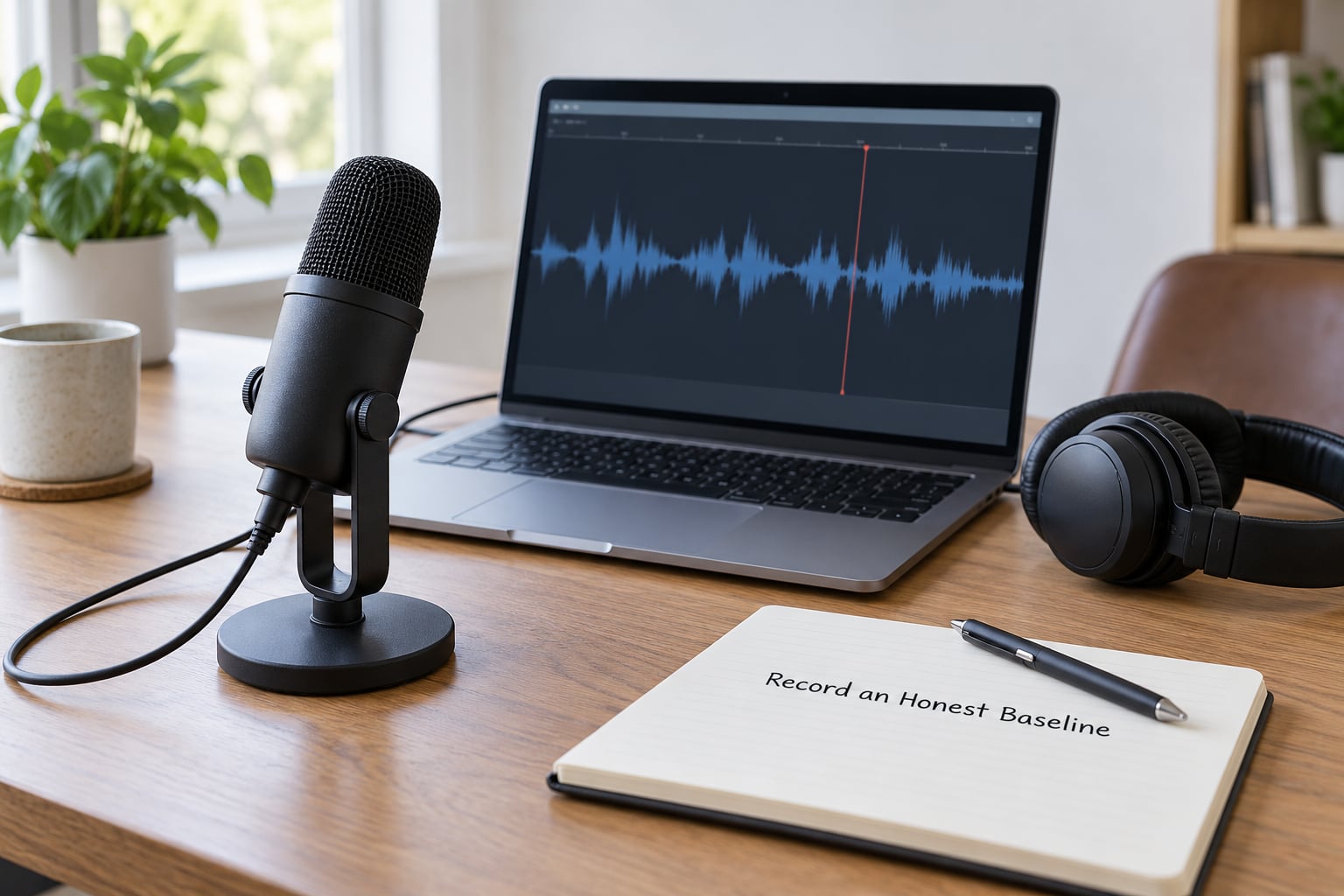
Record two minutes of yourself talking about something you know well. No script, no attempt at a radio voice, just explain a thing you did last weekend to a listener who knows nothing about it.
Then listen back twice. The first time, only note how fast you spoke. The second time, mark the places where you swallowed the last word of a sentence or sped up to get through a bit you did not enjoy.
Most people discover two things in the first playback. Their comfortable pace is slower than the one they use when they are nervous, and their natural tone is warmer than they expected. Write both down, because everything after this step is measured against that recording.
Keep it. Three recordings from today become the comparison set for the end of the guide.
Find Your Radio Voice Through Script Variations
Write one 30-second script. A weather-and-traffic line works well because you know it already:
“Right, it’s seven fifteen. Cloud thickening from the west, rain by nine. Roads are wet on the ring road, and there are delays on the bridge heading into town. If you’re setting off early, you’ll want another five minutes.”
Read it out loud four times, changing one thing each pass. First grounded and flat, like you are stating facts to one person. Second warm, as if a friend has just asked how your day is going. Third energetic, roughly 20 per cent faster, with the bridge delay landing harder. Fourth conversational, the version where you almost chat to yourself.
Record all four without stopping. The useful discovery is rarely “energy is best” or “warmth is best”. It is usually that one version sounds like you on a good day while the other three sound like you doing a job. Note which one that is, because that is your baseline style and everything else gets layered on top of it.
Improve Pacing, Pronunciation, and Emphasis
This is the least glamorous part and it does the most for intelligibility. Four drills cover most of it, and each takes under two minutes.
Sentence lengths. Rewrite anything over fifteen words as two sentences. Radio listeners are driving, cooking and half-listening, and a long clause is where attention goes.
Consonant endings. Train the last sound of every sentence. “Now” must end on a hard K, not a hum. Ten repetitions of “night, right, light, bite” onto a raised tone catches the habit fast.
Strategic pauses. Silence before the important word does more work than volume. Mark one pause in your script with a slash, then read it and resist filling the gap.
Names and numbers. Build a personal pronunciation list for the names you say often and stick to it. For numbers, say the digit groups rather than the number: forty-two is forty and two, 1,500 is fifteen hundred, and a price reads as fifteen ninety-nine, not fifteen hundred and ninety-nine.
Add two classic warm-ups before any of this. Hum gently on “mmm-mmm” while sliding up and down your range, then repeat “nay nay nay” as a tongue trill, lips vibrating. Both loosen the voice without waking the neighbours.
Add Personality Without Performing
A recognisable radio voice is mostly consistency plus two or three small habits nobody could describe. Some presenters start every link the same way. Some have a fixed sign-off. Some use one running joke that the regulars wait for. Pick one signature and repeat it long enough that it stops feeling like a bit.
Humour works when it is aimed sideways at the situation rather than at yourself. A laugh is fine; explaining that you are joking is not, because the listener already worked it out and now feels excluded.
Audience language matters too. “You’re listening to the six o’clock show” and “we’re going to keep you company” are cues that tell a listener this is a person, not a filing system. Overdo it and you become the station’s announcer voice, which is a costume rather than a style.
Test the Voice on a Real Microphone
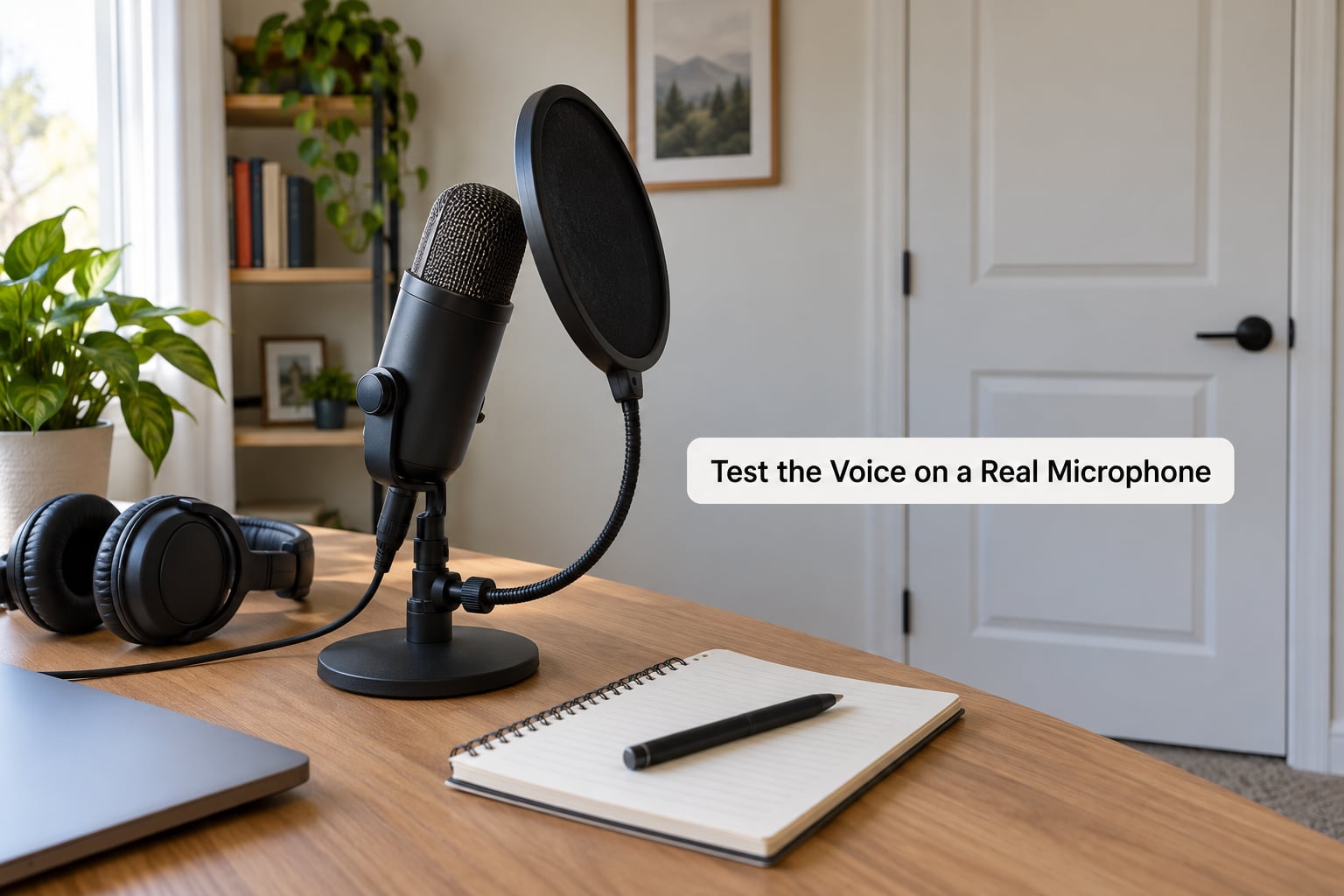
The voice you like in a quiet bedroom and the voice that comes out of a live microphone are different signals, and the gap surprises nearly everyone. Some microphones put on the harsh harmonics of sibilance and thin out the lower register. Some add a presence lift that turns warm into sharp. Test on your own ears rather than trusting a spec sheet.
Distance matters more than model. Start a knuckle-width to a fist away, a hand’s width for a softer read, and count the gap in your head before you speak. Too close and you get plosives even with a pop filter, too far and the mic hunts for the room’s noise.
Use headphones and listen to yourself in real time. Once you hear the live input, the feedback loop usually does something to your delivery within two or three takes, because you stop projecting and start speaking. If your setup has no monitoring, record a clip and play it back before you record anything longer.
Then repeat the 30-second script from the previous step on the new mic. Compare it to the phone recording side by side. The gap between those two files tells you whether your next improvement comes from a different microphone or from more practice, which is the question most beginners skip.
Review and Refine Your Sound
Self-review gets much easier once you use the same checklist every time, because you stop reacting to your own voice and start listening to specific things.
Is every word intelligible at low volume? Are there sentences that fall away at the end? Did the pace stay even, or did it race through the boring half? Did energy dip somewhere? How many filler words did you use, and where? Would you keep listening if a stranger were reading this to you?
Turn that into a three-recording plan. Recording one repeats your baseline script with one single change, such as only the pacing. Recording two adds the signature opener you chose. Recording three is unscripted: ninety seconds on anything at all. Save all three, keep the one that sounds most like you, and discard the other two without a second thought.
Common Mistakes
Nearly every “my voice is wrong for radio” complaint is one of these six things, and all six are trainable.
- Sounds over-rehearsed. That usually means reading a script word for word rather than rewriting it in your own sentences. Rewrite every intro in your own words before you record it, the way working presenters do.
- Flat or monotone. You are reading with your eyes instead of telling a story to one person. Read standing up and aim the last sentence of each paragraph at the far wall.
- Breathless. You are talking from the throat and running out of air mid-sentence. Slow down, breathe low before each link, and finish sentences with less volume rather than more.
- Overly deep or growly. You are pushing the vocal folds to sound more authoritative than they are. Speak at the pitch you use in conversation and add authority through pace and pause instead.
- Stuck in vocal fry. Nerves drop the pitch and the voice creaks at the bottom of the range. Hum and slide the pitch up before you speak, and drink more water than you think you need.
- Trails off at sentence ends. Volume falls instead of finishing a thought. Land every final word on a firm consonant and a slight downward note.
One more worth naming: blaming the microphone. A better mic fixes a dull or noisy recording. It does not fix diction, pacing or nerves, and it never will.
Frequently Asked Questions
What is a good radio voice?
A good radio voice is warm, clearly supported and well paced, and it stays close to ordinary conversation. Listeners should hear a person who is relaxed and interested in them, not someone performing a role. Clarity matters more than depth: an ordinary speaking voice with good breath support and clean endings beats a manufactured broadcast growl every time.
Do I need voice training to work in radio?
Not to get on air. Most community and hospital radio volunteers learn by doing, and plenty of presenters have never taken a formal lesson. Training or coaching helps if you have a specific problem such as a breathy tone, a persistent regional accent you want to adjust for a particular market, or vocal strain. Start with self-review, then get feedback from a presenter whose style you admire.
How can I practise radio presenting at home?
Record yourself on your phone in a quiet room and review the playback against a checklist: intelligibility, pacing, sentence endings, filler words, energy. Read one short script in four different deliveries so you can hear which one sounds like you. Repeat that pattern daily for a month. Recording the same material and comparing files is far more useful than reading advice and hoping for progress.
Should I change my natural accent for radio?
Usually no. Stations want listeners to recognise a voice as belonging to someone in their community, and a strong regional accent is often the thing people remember you for. Adjust only what hurts clarity: word stress, and a handful of names or places your audience pronounces differently. If you want a presenter job in a particular region, listen to that region’s output and match the conventions you hear.
How do I sound more natural and confident on a microphone?
Confidence is mostly familiarity, so the fix is reps rather than tricks. Record often enough that the microphone stops being a surprise, use headphones so you hear what the listener hears, and aim at one imaginary person rather than an audience. If you drift into announcer mode, rewrite the line in your own words. Warming up for three minutes also removes most of the early-session nerves.
What should I record before auditioning for a radio show?
Three to five minutes that shows range rather than one long set piece. Include a straight read with the numbers and names that station uses, a warmer conversational segment that sounds like you, and one short story or anecdote that ends properly. Name yourself at the start, use the station’s target market in the intro, and send it as clean audio with no background noise.
Conclusion
Start tonight with three recordings of the same thirty-second script: grounded, warm, and energetic. Listen for which one sounds like you on a good day, then spend four weeks fixing one element at a time.
Before you buy anything else, play recording one against your most recent take and ask what changed. If the words are clearer and the sentences end properly, practice is doing the work. If it is only the noise floor and the hiss that improved, the gear was the problem. Most people need the first answer, and neither of them needs a microphone or a coach to start.