Mic fright is a burst of anxiety that lands the moment you realise a microphone is live, and it fades with repetition rather than talent. If you know how to overcome mic fright, the fear becomes a short warm-up wobble instead of a reason to skip the session. Most people can record one throwaway take, listen to it, and press record again with a noticeably steadier voice, and that second take is the whole trick.
This guide is written for new radio hosts, podcasters, singers and anyone who has a speaking slot coming up and would rather not think about it. The process takes about twenty minutes of preparation the first time and two minutes once it is routine. Nothing here needs special equipment or a coach, only a quiet room, a rough plan of what you want to say, and permission to sound imperfect in the first attempt.
Table of Contents
What You Need to Overcome Mic Fright
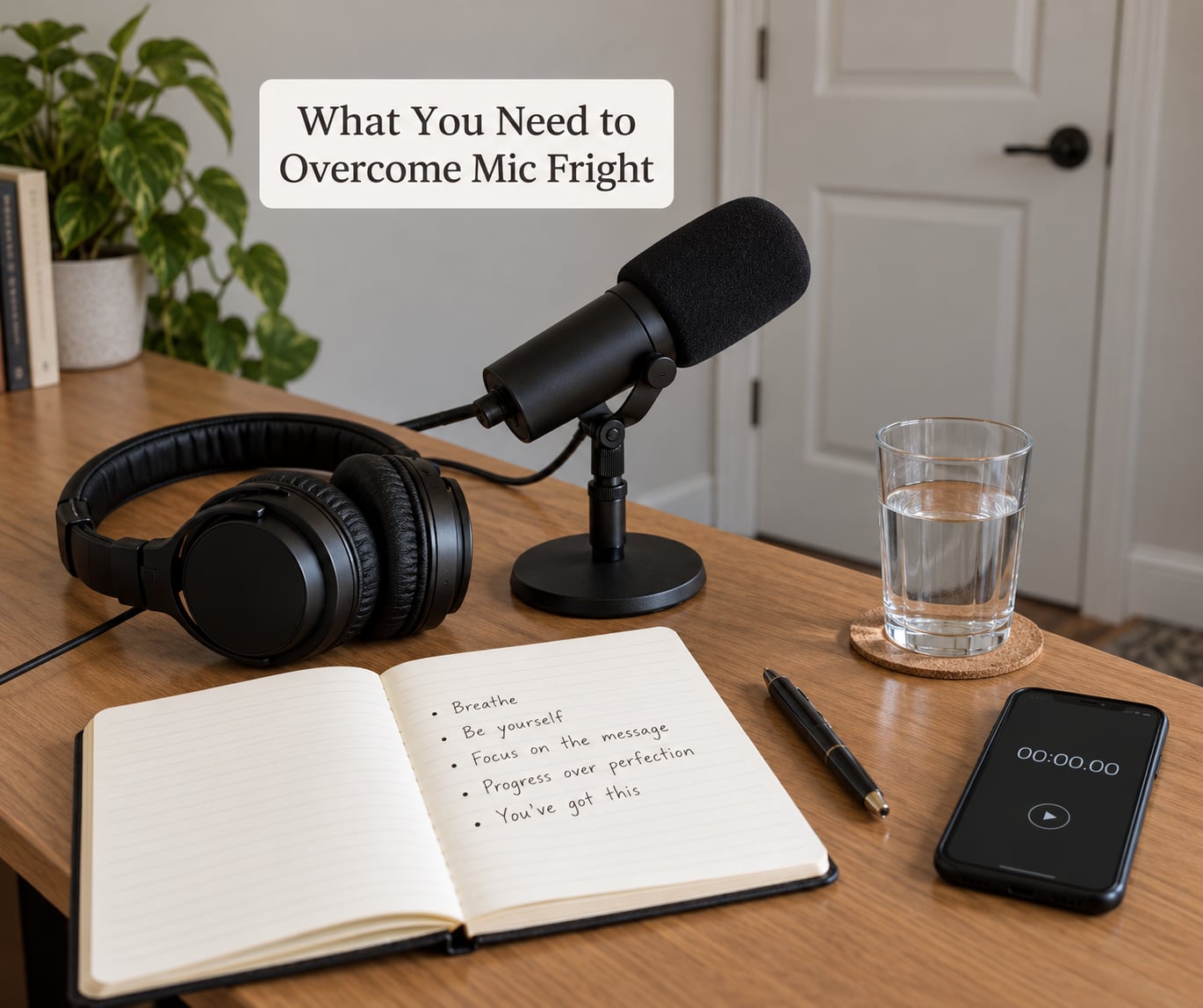
Nerves mostly come from the unknown, so everything on this list is there to remove a decision you would otherwise be making while your heart rate climbs.
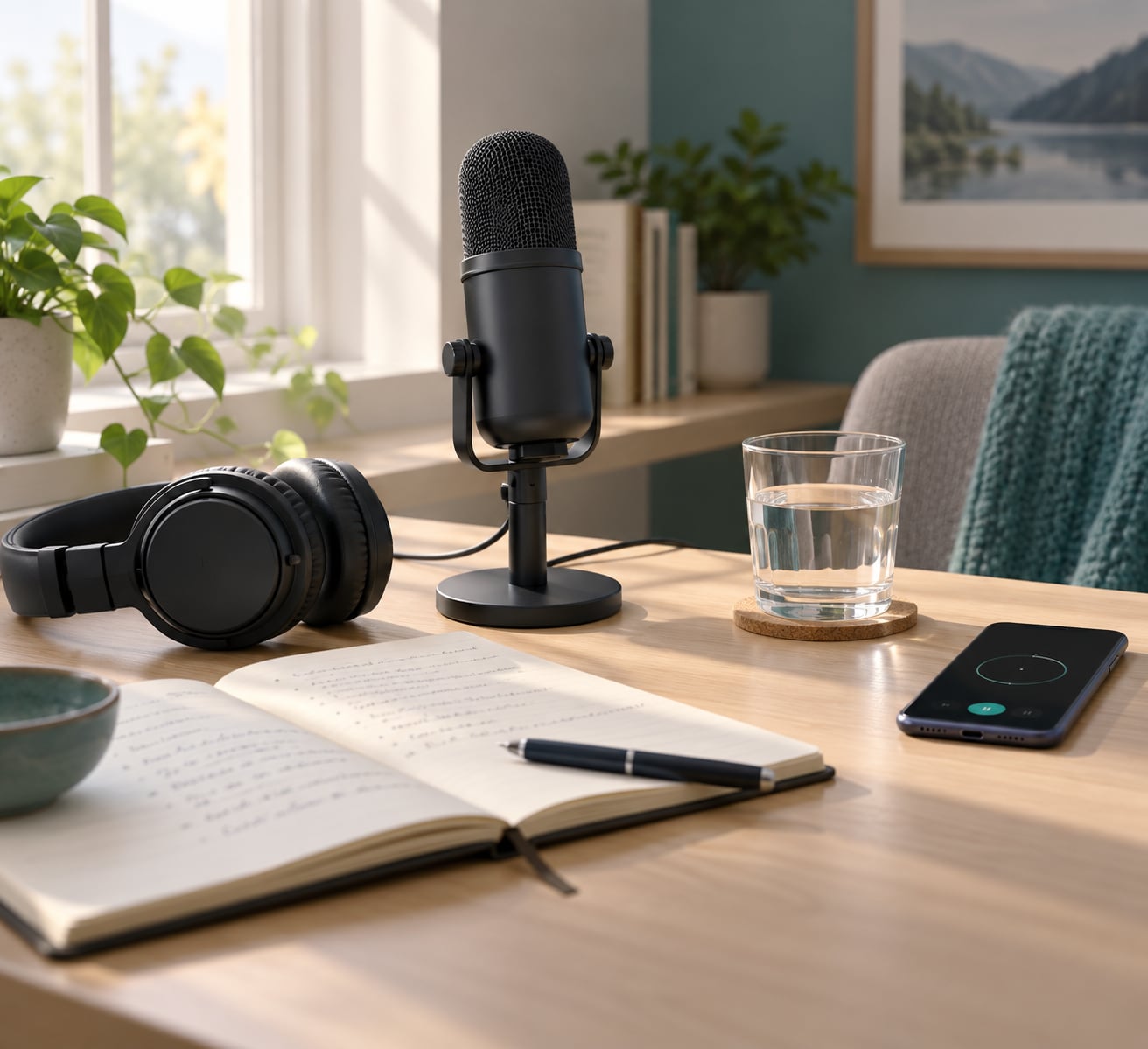
- A quiet room with a closed door. Background hum and a fridge cycle make people speak louder and faster, which then sounds nervous on playback. Ten minutes of closing doors and switching off noisy appliances buys you more than any microphone upgrade.
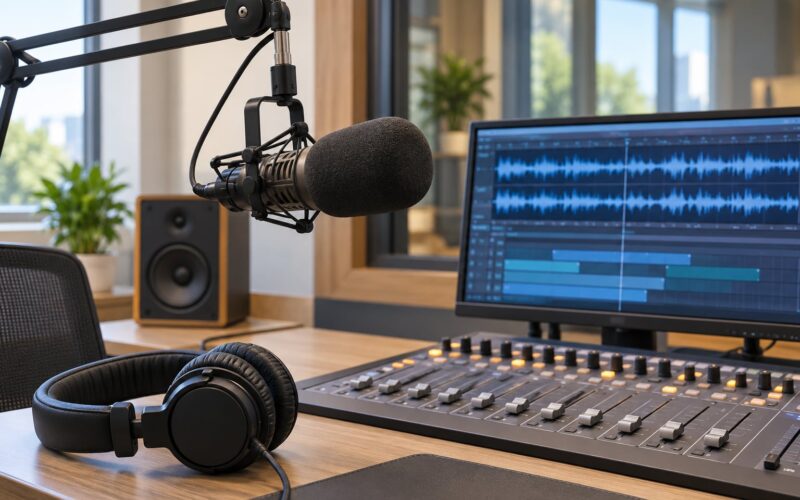
- A setup that needs no thought. Set the mic distance, gain and headphone level before you sit down to talk about anything that matters. If you are adjusting a knob mid-sentence, you are giving your brain a problem to solve while it is already busy being afraid.
- A short written outline. Three to five bullet points is plenty. A full script reads like one on air and leaves nowhere for your brain to go when it wanders; an outline gives you the next idea without locking you into exact wording.
- A bottle of water. A dry mouth is the most common physical complaint from new speakers and performers. Sip before you start, and again at any pause you have planned.
- One rehearsal recording. Your phone is enough. You are checking pacing and tone, not audio quality, so set it somewhere sensible and press record before the real thing.
- One friendly first ear. A friend, an experienced club member or a colleague who will tell you the truth kindly. Facing an audience you have met is far easier than facing an anonymous one.
Step-by-Step: How to Overcome Mic Fright in Six Steps
1. Prepare what you will say
Write three to five bullet points: an opening line, two or three main points, and a closing sentence you would be happy to say in any voice. That is a complete piece of talking, and it takes five minutes.
For a radio segment you might write: welcome back, one story about a listener’s email, a plug for Sunday’s show, sign-off. For a podcast intro, three sentences naming the topic and the guest work. For a live introduction, the person’s name, where they are from, and why they are worth listening to. Specifics are the point, because the moment you have nothing prepared is the moment your mind goes blank.
New ham operators get the same relief from writing down both sides of an exchange rather than just their own, which is why a written cue sheet is the standard fix on the amateur radio side of this problem. Know your lines, then stop fiddling with them.
2. Rehearse aloud before recording
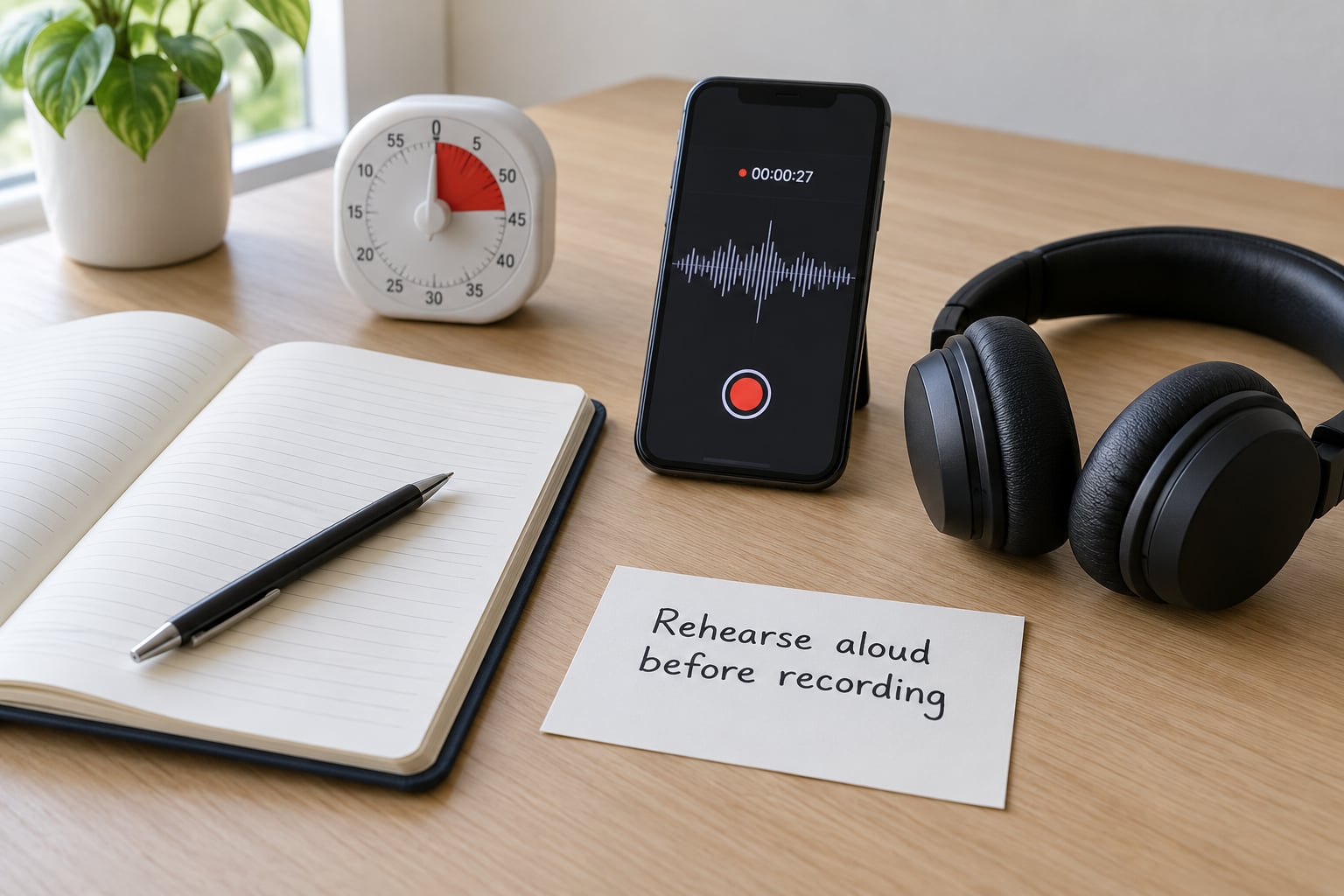
Reading silently in your head is not rehearsal. Speak the whole thing out loud at roughly the speed you would use on air, standing up if you can, and let the phone capture it. Most people discover on playback that they run thirty percent too fast and swallow the ends of sentences.
You are listening for three things: whether the pace sounds like conversation, whether you sound like a person rather than a brochure, and whether each point connects to the next without a gap where you would normally say “um”. If all three are true, the rehearsal did its job. If you want another pass, change one specific thing rather than starting again from the top, because starting over is where rehearsals turn into avoidance.
3. Use breathing and warm-ups to overcome mic fright
Adrenaline makes you breathe high and shallow, which tightens your throat and makes a voice shake. The fix is to breathe low and slow before you speak, not during a crisis moment. Box breathing works well: breathe in through the nose for four counts, hold for four, out through the mouth for four, hold for four. Three or four rounds is plenty, and forcing a big deep breath instead tends to make people light-headed.
Then move the body a little. Roll your shoulders back and down, unclench your jaw, and open your mouth wide twice. Hum quietly for a few seconds at a comfortable pitch, which warms the voice without waking the neighbours.
Drink a few sips of water rather than gulping, and remember that you will sound nervous if you push your voice. Talking loudly into a microphone is the one adjustment new speakers most often need, and it makes nerves audible. Aim for the volume you would use to talk to someone two metres away. Performers on specialist forums make the same point about the first few minutes: once you are through them, the tightness usually goes.
4. Start with a familiar opening
The hardest stretch of any recording is the first ten seconds, because it is entirely unfamiliar and nothing has happened yet to steady you. Learn your opening lines until you could say them in your sleep.
A station identification, a greeting and a topic sentence do the job well: good morning, this is the Friday community show, and today we are talking about the changes to the bus route. Whatever the format, write it out and say it four or five times before it counts for anything. On the day you are not deciding what comes next, and a predictable first minute buys you a calm middle.
5. Record more than one take
Treat take one as raw material rather than a verdict. Nothing is lost by having two or three attempts, and knowing that in advance is the quietest way to overcome mic fright, because the fourth take stops feeling like a test. In edited formats like podcasts and voice work you will end up using sentences from several of them anyway.
The rule that keeps people out of a spiral is small: after each take, change one element only. Slower on this one. Point two shortened. That is a fixable problem. “That was awful, start the whole thing again” is a judgement, and it is the thing that makes the fourth take worse than the first.
6. Build a post-recording reset
Listening back with headphones is uncomfortable at first, so make it mechanical. Listen once for content, once for pace, and write a single sentence of feedback. One note per session is plenty, and it is what turns a bad take into a rehearsal rather than a failure.
Then stop. Everyone who records regularly has a limit where reviewing again stops being useful and starts being self-criticism. Decide that limit before you start: three takes and two listens, then you are done and you press record again next time with one change. That small checklist, preparation, rehearsal aloud, warm-up, familiar opening, multiple takes, one note, is the whole method, and it is how to overcome mic fright for good rather than just for today.
Common Mistakes
Almost every persistent case of mic fright comes down to one of six habits, and each has a straightforward correction.
Rehearsing until you sound robotic
Memorising every word removes your ability to recover when you do forget one. Learn the opening and the ending, keep the middle as talking points, and accept that your sentences will differ each time.
Speaking too close to the microphone
Leaning in to sound sure is what produces the thin, breathy, crackly voice people mistake for nerves. Keep a consistent distance of roughly a hand’s width from the mic, and check it on playback rather than by instinct.
Holding tension and waiting to relax
Relaxing on cue does not work; the jaw stays tight and the breath stays high. Lower the effort instead by speaking a little quieter than feels natural, which is much easier to manage than trying to feel calm.
Apologising out loud
Opening with an apology for sounding nervous makes everyone think about your nerves. Start with content instead, because the confidence arrives about ten seconds later anyway.
Treating a mistake as the end of the take
A stumble is not a failure, it is a cut. In edited work it is a clean edit point, and in live work it is a breath. Only a genuinely lost train of thought needs the recovery line: “sorry, I lost that, let me take that again.”
Over-editing and over-listening
Playing a bad take fifteen times tells you nothing new and leaves you wired. Listen twice, note one thing, stop, and go again tomorrow.
One habit worth building on top of all this: escalate the stakes gradually rather than all at once. Read your notes into your phone, then record yourself for a minute with nobody listening, then record for a friend, then for an audience. Forum threads about this problem keep describing the same path, and it works because fear responds to small repeated doses, not to one big leap.
Frequently Asked Questions
How long does mic fright take to go away?
For most people, the sharpest anxiety drops noticeably within two to three weeks of regular low-pressure practice, and speaking feels unremarkable after two or three months. The pace matters more than the total hours, so short daily sessions beat one long recording day a month. Comfort arrives when a microphone stops being an event, which takes repetition of ordinary takes rather than any single breakthrough moment.
Why am I nervous on a mic but fine in person?
In person, other people give you constant feedback and your brain can adapt mid-sentence. A microphone removes all of it: no eye contact, no body language, no chance to gauge a reaction, and often a permanent recording. That unpredictability is what your brain treats as a threat. Writing your opening and main points down restores the structure that a live conversation would have given you.
How do I stop my voice shaking on a microphone?
Shaking comes from adrenaline tightening your throat and pushing your voice up in pitch. Breathe low and slow for a minute beforehand, four counts in and four counts out, and unclench your jaw. Speak slightly quieter than feels natural rather than pushing, and keep water nearby. On the first take the shaking is normal; on later takes it fades as your body learns nothing bad happened.
Should I use a script on a podcast or on the radio?
Never read a full script aloud, because it flattens your delivery and sounds read. Learn your first and last sentence word for word and use bullet points for the middle. Scripts and cue sheets work when they remove the effort of deciding what to say next, which is the single most common reason beginners freeze. Speak the bullets as you talk, not as you read them.
What do I do when my mind goes blank mid-sentence?
Use a recovery line and keep going. Say something like “sorry, I lost my train of thought, let me start that again”, take one breath, and pick up from your last main point rather than your last word. Everyone blanks occasionally and listeners rarely register it. In edited work you simply cut the gap; in live work, moving on quickly is what makes it unremarkable.
Is my problem mic fright or bad mic technique?
If it only happens when people are listening, it is nerves, and the audio itself will be fine on playback. If the recording sounds distorted, clipped or harsh every time regardless of who is listening, it is technique. Rough volume, sibilance and plosive bursts are setup issues fixed by distance, gain and a pop filter. Judging your own voice mid-session, however, is a sign of nerves, not a fault.
Start with one short rehearsal take. Write three bullet points, say them out loud into your phone, listen once for pace, and that is the whole first session. That is how to overcome mic fright in practice rather than in theory: one ordinary recording, repeated until a microphone stops being an event. The fear does not leave in one morning, but it leaves, and it starts leaving the first time you press record anyway.