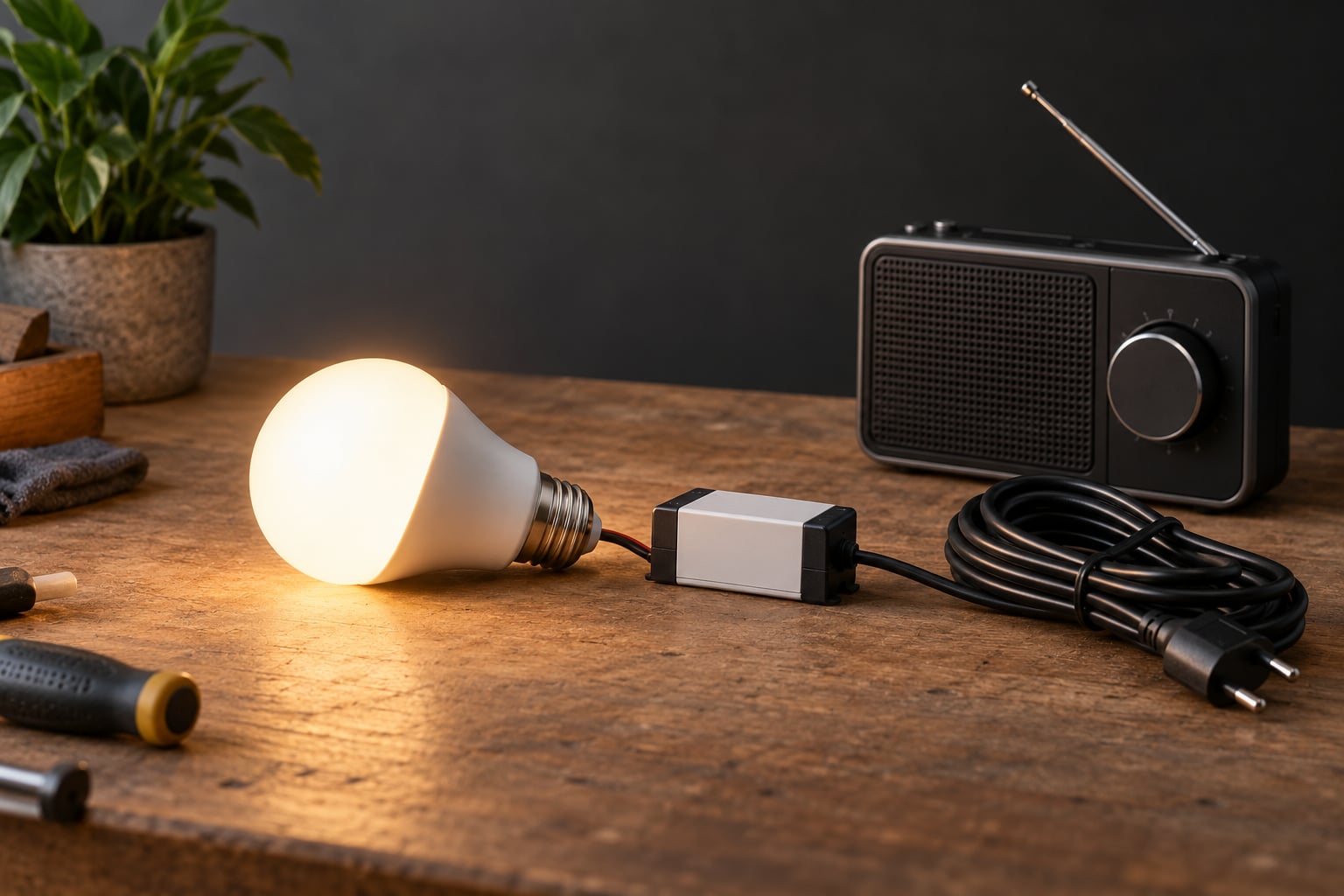
Here is how LED lights cause radio interference: the small switching power supply inside the bulb or fixture switches current thousands of times a second, and those fast current edges generate harmonic noise that travels down the wiring and radiates into your antenna. The LED chip is rarely the culprit; the driver behind it usually is. Switch the suspect fixture off and the noise changes or disappears, and you have found your source.
In practice this shows up as buzzing, hissing or pulsing on AM, crackle on FM, dead channels on DAB, and trouble for CB, ham and marine radios. Some of it comes from your own house, some from a neighbouring property you cannot reach, and a good share of it from dimmers, chargers and other cheap switch-mode gear plugged into the same circuits.
Most cases are solved without touching any wiring. You need about an hour, a portable AM radio as a detector, and a replacement bulb or two.
Table of Contents
- How LED Lights Cause Radio Interference
- What Radio Interference Sounds Like
- How to Identify the Light Causing the Interference
- Common Causes of LED Light Radio Noise
- Safe Ways to Reduce LED Interference
- Fixes to Avoid and When to Call a Professional
- Frequently Asked Questions
- Conclusion: Start With a Simple Power-Off Test
How LED Lights Cause Radio Interference
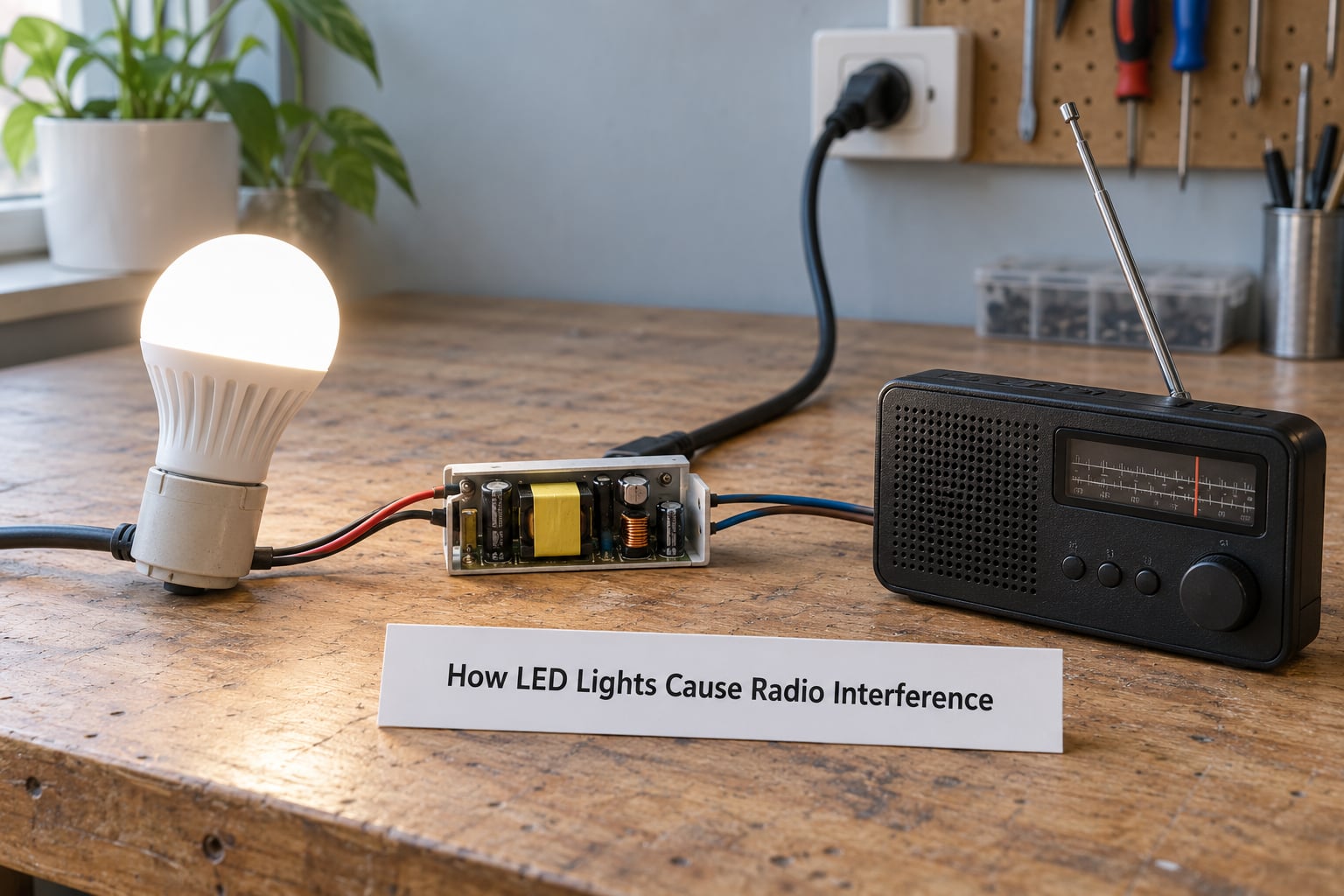
Mains voltage is fine at 50 or 60 Hz, and a simple resistive load like an incandescent bulb does not create radio frequency energy. An LED lamp changes the game. It runs on a small direct current supply, and getting there means the lamp chops the mains current up into tens of thousands of tiny pulses a second.
Why the LED driver is usually to blame
The switching power supply, sometimes called the driver or the ballast in older terminology, is a step-down converter with a few very fast transistors in it. Every time a transistor snaps on or off it creates a sharp edge in current, and sharp edges are rich in harmonics. Those harmonics climb well past the switching frequency and land in the amateur and shortwave bands.
A well-made driver filters that noise out with a common-mode choke, suppression capacitors and careful internal layout. A cheap one leaves it in the output and down the mains lead. That difference is why branded lamps from Philips, Osram, Cree, GE and Sylvania are widely reported as quiet while no-name bulbs get blamed in almost every interference thread I have read.
How dimming makes the noise worse
On a dimmable lamp, the driver also chops the current on purpose. Pulse width modulation switches the LED on and off hundreds or thousands of times a second to set brightness, and the switching frequency and its sub-harmonics can fall right into the bands a receiver is trying to hear.
Add a dimmer that expects a different kind of load, and the problem gets noisier. Trailing-edge dimmers cut the wave in half at one side; leading-edge types use a bridge and chop on both sides, which pushes more energy into the harmonics that end up on your wiring. A lamp rated for dimming, paired with a dimmer rated for LED loads, is a much quieter combination than a standard lamp on an old mechanical dimmer.
Where the noise goes once it leaves the lamp
Noise leaves the lamp two ways. Conducted noise rides along the mains wiring, which acts as an antenna running through every wall of the house. Radiated noise comes straight off the lamp and its leads, and gets stronger when the cable is long and hanging free.
This is why distance matters. A radio in the same room as the suspect lamp hears it loudly. Move the radio two rooms away, or run a longer aerial lead, and the same noise may drop well below the station signal. Your neighbours’ lamps are radiating into your property too, and their wiring is effectively an aerial on your fence line.
What Radio Interference Sounds Like
Before you go hunting for a lamp, recognise the noise. Electrical interference has a character that differs from ordinary static, and that difference is often enough to identify it.
- Buzzing or a low hum at a steady pitch, most obvious on AM, often at or near the mains frequency multiplied up into the band.
- Hissing and crackle that sits across the whole AM band rather than moving with a station.
- Pulsing or clicking in time with something electrical, sometimes audible once per second, sometimes irregular.
- Noise that changes when a light is switched off, which is the single most useful clue you can get.
- Weak or missing FM and DAB stations while AM is noisy, or the reverse, depending on which part of the spectrum the harmonics land in.
Ham and shortwave listeners often describe a wide band of hash across 40 metres and 80 metres, and forum reports describe an urban home where the noise floor sat at S9 until the power was switched off at the meter. Marine VHF sets fitted near LED navigation lights have failed completely, which is a safety problem rather than an annoyance.
| Band or service | Why it is affected | What LED noise sounds like |
|---|---|---|
| AM and shortwave | Narrow channels, high gain on low frequencies, long aerials | Buzz and hiss across the band, stations vanish under the noise |
| FM and DAB | Wider bandwidth and stronger capture effect | Rushing or crackle on strong stations, dropouts on weak ones |
| CB and 2 metre amateur | Popular frequency sits close to common switching and harmonic regions | Repeater and handheld microphones full of noise, no usable signal |
| Wi-Fi and streaming | Susceptible to radiated noise from mains-borne switching products | Reduced throughput, retries, connections dropping near the fixture |
Interference also arrives indirectly. A switched-mode laptop charger, a solar inverter, an aquarium light or a cheap LED driver inside a decorative lamp can radiate the same way a bulb does, so do not assume the culprit is the light in the room you are looking at.
How to Identify the Light Causing the Interference
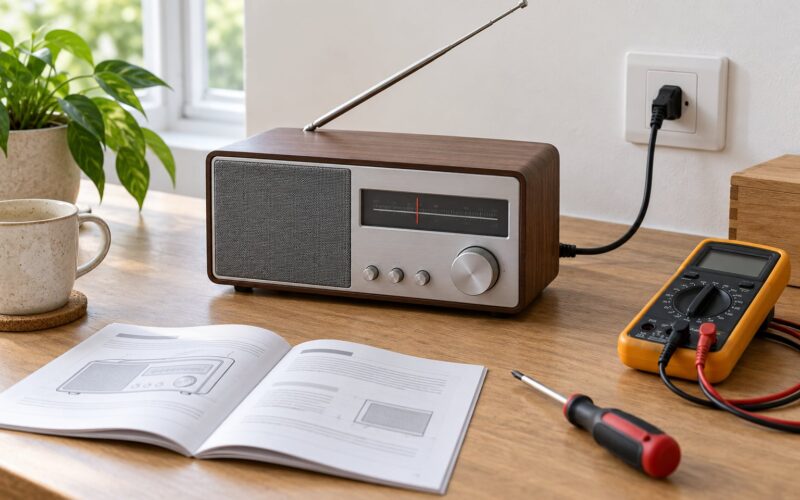
Finding the source is straightforward and safe if you work from switches rather than from the fuse board. The fastest method uses an AM radio as a noise detector, because AM receivers hear low-frequency harmonics of switching supplies far more loudly than FM sets do.
- Tune a portable AM radio to an empty frequency with the volume up, somewhere between two stations where nothing sits. Keep it a few feet from the suspect lighting and about a foot above it.
- Switch each lighting circuit off at the wall, one at a time. Listen for the buzz to drop or vanish. Note which circuit does it and how far the volume has to come down.
- Narrow it down within the circuit by switching individual fittings off at the switch. If you are not sure which switch is which, turn one off, listen, then turn it back on and try the next.
- Unscrew the suspect bulb and try another one. Test it in a known-good lamp or socket. If the noise follows the bulb to a different fitting, the driver inside that bulb is the source.
- Check for dimmers, then check other rooms. A dimmer on the suspect circuit often confirms the problem as much as the bulb does. If nothing in your house changes anything, the noise is coming from outside.
If the noise persists with every light in the house off, check what else is running: chargers, set-top boxes, monitors, an aquarium or marine tank light, a solar inverter or a new appliance. Then walk the property boundary with the same AM radio. Neighbouring lamps and their internal wiring are a well documented cause, and the surest confirmation is watching the meter or asking for a power cut at a time when you can listen.
Common Causes of LED Light Radio Noise
Once you have a suspect fitting, the cause usually falls into one of a handful of categories.
A failed or incompatible driver
The most common cause by a distance. A cracked electrolytic capacitor, a cold solder joint, or a driver simply built without proper filtering lets switching noise straight through. The fault does not have to be dramatic. Interference that comes and goes as the lamp warms up, or that only appears when the lamp is at low brightness, usually points to a marginal component rather than a dead one.
Loose connections and poor grounding
A lamp holder with a loose neutral, a damaged earth conductor or a corroded connector makes the current flow take an unwanted path, and that path radiates. Where the earthing is poor, the noise often grows as more lamps are switched on, because the shared earth conductor carries the sum of everything plugged in.
Dimmers that do not match the lamp
A standard LED lamp on a dimmer built for incandescent bulbs, or a dimmer without an LED load rating, forces the driver into an operating region it was never tested in. That produces extra harmonics and sometimes an audible flicker in the lamp itself.
Long, dangling and unshielded cable runs
A two-metre lead from a 12 volt LED strip left hanging to daisy-chain another strip makes a poor antenna. Long runs, particularly on 12 and 24 volt systems in vehicles, boats and garden lighting, radiate far more than short tidy ones tucked behind a panel.
Other switch-mode equipment
Anything with a small high-frequency converter can radiate: LED grow lights, CCTV cameras, cheap USB chargers, electric vehicle chargers, solar inverters, aquarium lights and LED tape. Forum reports describe rural properties where a solar inverter and LED lighting together pushed an HF noise floor far higher than either alone.
Vehicles deserve their own note. LED headlight retrofits are a frequent source of noise on the AM band, and the reason FM often survives is that the switchmode harmonics concentrate in the lower frequencies. Reported symptoms include CAN bus error codes, hyperflash from the bulb electronics, and the radio going dead with the headlights on. Marine VHF radios fitted near LED navigation lights have failed in the same way, which is why installers call for screened and filtered supplies on boats.
Safe Ways to Reduce LED Interference
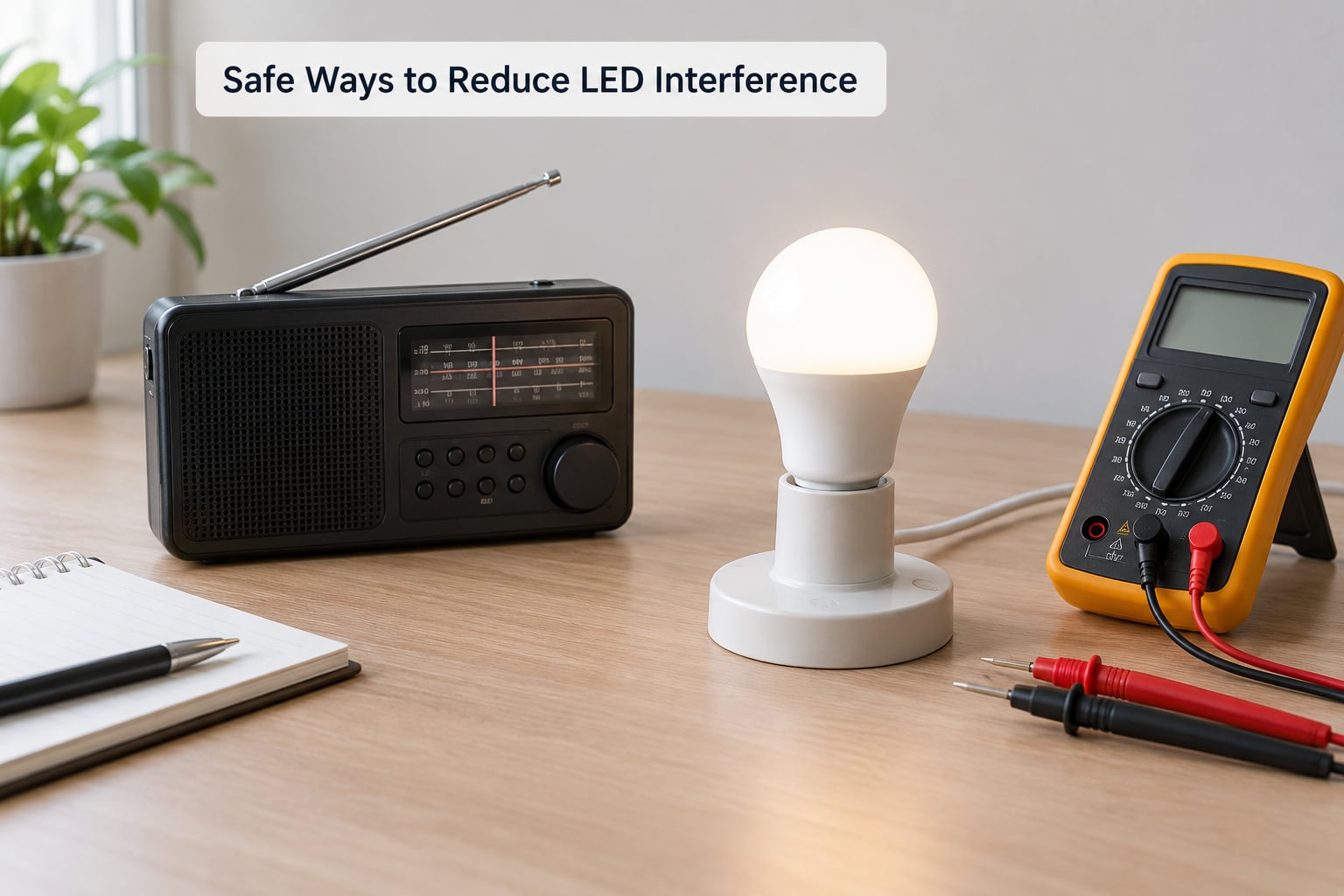
Work through these in order, from cheapest and least invasive to more involved. Stop as soon as the noise changes.
Separate the suspect fixture from your radio setup
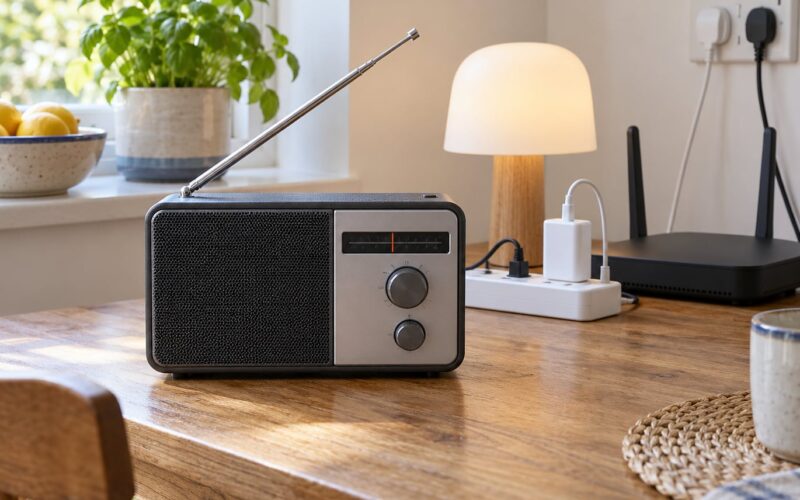
Put the radio and its aerial as far from the lamp as you reasonably can, and keep the aerial lead short and away from mains wiring. If the noise falls away, you have confirmed the source without opening anything.
Swap the bulb first
A lamp marked for dimmable use, from a manufacturer that publishes electromagnetic compatibility data, is the cheapest test there is. Keep the failed bulb so you can retest it later in a different socket, which tells you whether the bulb or the fitting carries the fault.
Match the dimmer to the load
Use a dimmer explicitly rated for LED lamps at the wattage of the circuit. Where a dimmer is not the issue, running the fitting at full brightness rather than part dimmed often reduces the noise noticeably.
Clamp ferrite cores on the cables
A snap-on ferrite choke around the lamp’s own lead, or around the mains and low-voltage cables where they leave the fixture, suppresses noise without cutting power. A second core fitted further along the cable improves the effect, and users report gradual improvement as cores are added. For material, manganese zinc mixes such as Type 31 suit the lower HF bands, Type 43 covers from around 30 MHz up into VHF, and Type 61 is aimed at the highest frequencies. Mix choice matters less than a firm, closed clamp with a good surface contact.
Tidy and shorten the cable runs
Cut unused length out of the loop rather than bundling it, route cables alongside earth or signal returns rather than parallel to mains live conductors, and use shielded cable for longer low-voltage runs. Keeping a strip’s power supply close to the strip rather than at the far end of the house helps too.
Improve the earthing properly
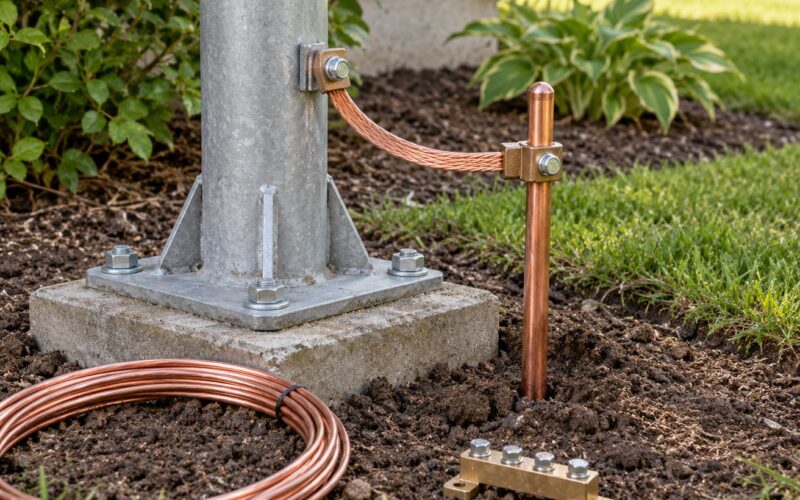
Where the noise scales with the number of lamps switched on, the earth path is suspect. Do not improvise this. A qualified electrician can check the fitting’s earth continuity and the bonding in the circuit, and that is the correct fix rather than a filter that hides the underlying fault.
Think about bigger changes for repeated problems
In a house with twenty recessed LED downlights, twenty separate drivers means twenty chances to radiate. Running them from a single quality central supply on a low-voltage distribution system removes the individual converters entirely, which is a genuine long-term answer for a new installation. Vehicle and boat installers have solved the same problem with filtered and screened supplies feeding the lights from one point.
For reception problems you cannot trace, receiver-side options exist too. A magnetic loop antenna with tight pattern rejects much of this local noise and is widely reported as effective on the lower HF bands. A noise canceller can subtract a repeating local noise signature, though it needs careful adjustment to avoid cancelling real signal. Where reception matters more than location, running the receiver remotely and piping the audio back is the surest method of all.
Fixes to Avoid and When to Call a Professional
Everything above assumes you keep away from live mains conductors. A few popular-sounding remedies are bad ideas.
- Do not remove the earth conductor to silence a lamp. It will often appear to work, and it removes the protection that stops the fitting becoming lethal in a fault.
- Do not bypass switches or fit a bypass capacitor across a dimmer. Both leave the driver running outside its tested envelope and are a fire risk.
- Do not open a fitting while it is live. Bulb replacement and switching off at the wall are fine; anything more belongs to someone qualified.
- Do not mix lamp types on one circuit and hope the noise averages out.
- Do not fit unrated ferrite cores or foil tape inside a mains enclosure. A core is fine around a cable; anything that requires opening an energised fitting is not.
Call an electrician when the noise appears only when several lights run together, when lights flicker or dim unexpectedly, when a fitting is warm to the touch, when a socket or switch looks scorched, or when the circuit trips. Those are wiring faults, not interference faults.
Call a radio technician, or an experienced amateur operator, when the noise persists with everything in your house switched off, when reception is affected on many bands at once, or when a vehicle or boat installation is interfering with safety-related electronics. And on a boat, treat a VHF set that degrades when the navigation lights come on as a fault to put right before the next trip.
Frequently Asked Questions
Do all LED lights cause radio interference?
No. A well-designed, correctly installed LED lamp stays inside electromagnetic compatibility limits and produces no noticeable noise. Interference comes from bulbs with poorly filtered drivers, loose connections, a missing earth, or a lamp and dimmer combination that was never tested together. If switching off every light in the house changes nothing, the noise is coming from another source entirely.
Why does only one room in my house have the interference?
Usually because that room is on its own circuit, with its own fittings and its own dimmer, and the noise radiates most strongly at short range. A long aerial lead that runs near the circuit also acts as a pickup, while a well-shielded set elsewhere in the house hears little. Moving the radio closer to or further from the suspect fitting usually shows which effect you have.
Can a dimmer switch cause LED radio interference?
Yes, and it is one of the most commonly missed causes. A dimmer chops current to set brightness, and an LED driver designed for full-on operation may generate extra harmonics when dimmed. A standard lamp on a dimmer built for incandescent bulbs is worse still. Using a dimmer rated for LED loads, and a lamp marked dimmable, resolves most dimmer-related noise.
Is it the bulb or the driver causing the noise?
In almost every case it is the driver, the small switching power supply built into the lamp or fixture. The LED chip itself operates at low voltage and contributes very little. You can confirm this by swapping the suspect bulb into a known-good fitting: if the noise follows the bulb, the driver inside it is the source, and replacing that bulb fixes the problem.
When should I have my radio or lighting repaired instead of fixing it myself?
Have the lighting checked by a qualified electrician when noise appears only when several lights run together, when fittings flicker or run warm, or when a switch or socket shows scorching. Have the radio looked at when every light in the house is off and the noise continues, or when many bands degrade at once. Both cases point to a wiring fault or external source rather than a lamp you can simply replace.
Conclusion: Start With a Simple Power-Off Test
Start at the wall switch, not at the fuse board. Turn off one lighting circuit at a time with a portable AM radio tuned to an empty frequency, and note exactly which circuit changes the noise. That single test tells you whether you are dealing with your own fittings, a dimmer, or something outside the house.
Once you know the source, the cheapest fixes come first: swap the bulb for one from a manufacturer that publishes interference data, match the dimmer to the load, and clamp ferrite cores on the cables where they leave the fixture. Reserve driver replacement, cable rewrites and anything involving earthing for a qualified professional.
If nothing in your home changes the noise, stop chasing lamps and look at what you can influence: a better shielded or magnetic loop aerial, a noise canceller, or receiving remotely from a quieter spot. Understanding how LED lights cause radio interference is most of the battle; isolating the source is the rest.